
Making Sense of the Chaos
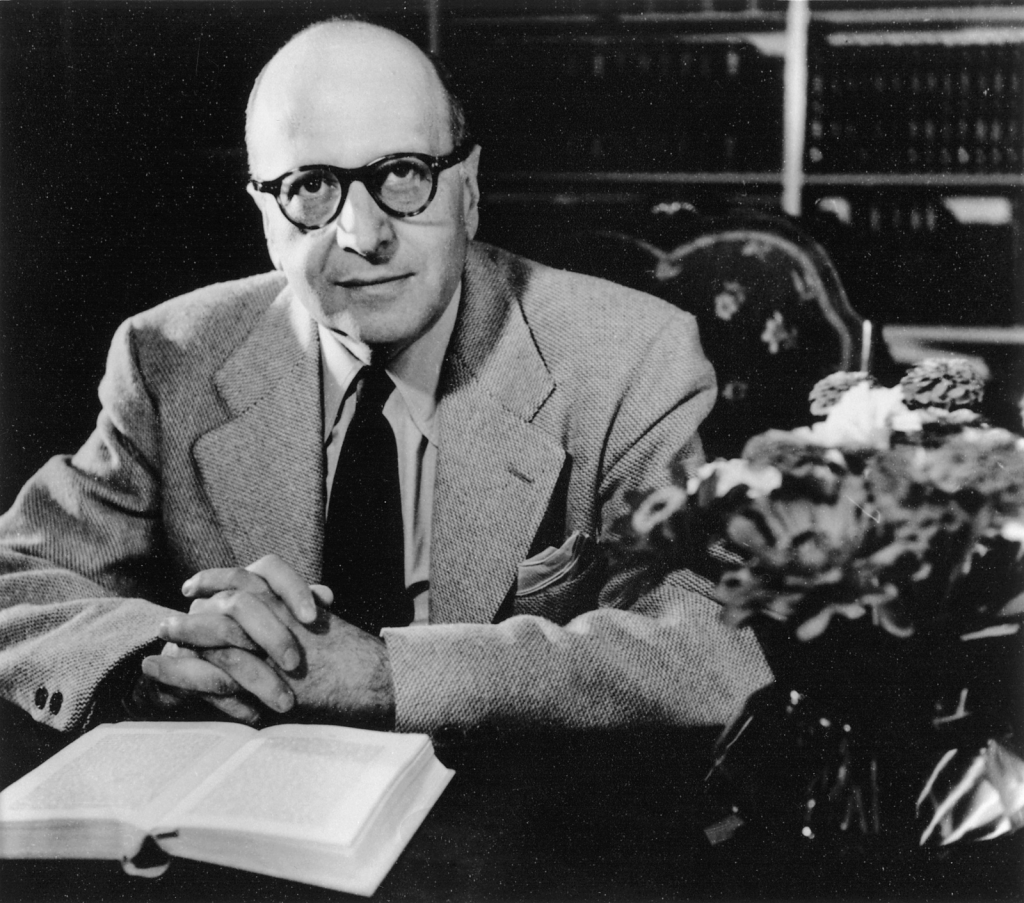
In the next several posts, we will look at Critical Theory through Max Horkheimer’s 1937 essay “Traditional and Critical Theory,” in which he first defines Critical Theory through the contrast of it with other traditional theories. It was Horkheimer who presented the agenda for the Frankfurt School in his 1931 lecture given upon receiving the directorship of the Institute of Social Research. In that lecture, Horkheimer proposed merging philosophy and social theory with psychology, political economy and cultural analysis in ways that developed a social philosophy capable of truly interpreting social reality, which, was and still is an important concept of Marxism, but there was more. He also implied that this process of interpretation of social reality would also create opportunities to change social reality. Why was that important?
Social reality through a Marxist lens is always perceived to be bias (unless it is Marxist) and rooted in a class struggle between the working class and the bourgeoisie (or capitalists). Marx saw capitalism like he saw all societies of the past, rooted in slave labor. To him, they were the same; their class struggles were similar with one smaller group exploiting everyone else for their own benefit, which is why he advocated, as a true Marxist, for the common ownership of the means of production. He believed common ownership would eliminate the profit motive, which he saw as one of the main causes of class struggle. He advocated replacing it with a motive for human flourishing, but time has not been kind to Marxism. Common ownership of the means of production has been used, not to produce human flourishing, but, instead, to oppress and crush human flourishing through the vehicle of communism. It is in communism where we find much of the tyranny and the oppression in our world today, and it is also in communism where we find more suffering than flourishing. Critical Theory is not Marxism, at least it is not supposed to be. How is it different?
Horkheimer used social sciences as the standard for Critical Theory because he found that the social sciences modeled themselves after the natural sciences, which root themselves in empirical social research. This was important for him, but there was also the issue of a distinctly positivist orientation, which he had to address (Positivism is the idea that every assertion can be scientifically or mathematically verified which justifies the rejection of metaphysics and theism.). This positivist view of the world is still how we tend to see knowledge production today; it is true if proven by quantitative research (that which roots itself in the mathematical and the scientific), which make most of us positivist-bias, trusting only science and math as the means to truth. Truth is found by both objective and subjective means. Critical Theory not only does not embrace positivist theory, but it is slowly trying to replace it with itself, which was Horkheimer’s solution to this issues.
When we examine Critical Theory, we find that it reflects only on its own origins, which are subjective and murky at best. This is one reason why Critical Theory moves away from a positivist view of the world … Critical Theory is primarily subjective; it depends on intentionality and seeks to leave space for newly created theories and philosophies with a distinctly Critical Theory orientation. It also embraces “an interdisciplinary methodology,” as I have highlighted, that seeks to bridge the gap between research that is empirical and research that is rooted in what one author called, “the philosophical thinking needed in the correlation of history and empiricism.” That bridge between, that which is static, in the past, (history) and, that which is experienced, in the present (empirical) is one that must be traveled. For a Marxist, it is an easy journey across, but for all others, it is one full of potholes and difficulties, which is seen as opportunity by the Marxist. One theorist put it this way, “Critical theory aims not merely to describe social reality, but to generate insights into the forces of domination operating within society in a way that can inform practical action and stimulate change.” Again, we cannot forget the Marxist view of social reality and the struggle they see in it. Critical Theory seeks to determine the best ways to undermine current social reality—because they see it as oppression—to prepare it for its own Marxist reality.
One of the first and most fundamental goals of Critical Theory is to unite theory and practice, not to discover that which is true, but to form a “dynamic unity with the oppressed class.” This unity of theory and practice in Critical Theory is not a unity as much as it is takeover. Both theory and practice must submit to the subjectivity of Critical Theory in ways that transform, allowing for the formation of a dynamic unity with the oppressed class. When this transformation takes place, research, whether quantitative or qualitative, takes a hit and becomes something it was not supposed to be … tainted with intentionality and the subjectivity of Critical Theory. For Critical Theory to be itself, it required an intentionality, rooted in its subjectivity, forcing both theory and practice to surrender to the subjectivity of Critical Theory. It is the subjectivity of Critical Theory that is king in all its encounters, and this is by design.
Horkheimer, in the opening paragraph of his essay stated, “The real validity of the theory depends on the derived propositions being consonant with the actual facts. If experience and theory contradict each other, one of the two must be reexamined.” This reexamination was the change Critical Theory brought to theory, but it could only happen if theory had already surrendered its past. In the past, if experience and theory contradicted each other the hypothesis was incorrect. For example, if my theory is that the sun will not come up tomorrow and I wake up and run to the window and see the sun then my hypothesis is not correct, forcing me to change my hypothesis. In Critical Theory, it is the hypothesis that has taken the place of practice and theory. It is no longer the hypothesis that determines the truth of a theory; Critical Theory is the truth and all other factors, including a hypothesis, are to be its subjects.
If experience and theory contradict each other something is wrong, but what? A theory that needs adjustment to align with experience is not really a theory but merely an assembly line of options that can be adjusted to produce the desired product. The idea of experience and theory in Critical Theory is not theoretical in any sense of the word; it is instead pragmatic, practical and interchangeable. Adjustments are sought to determine how to align experience with theory to create a social philosophy capable of changing theory first, but ultimately changing society. Horkheimer’s response to the contradiction of theory and experience was that either the scientist failed to observe correctly, or the principles of the theory were wrong, but we have to ask this question: are we talking about allowing the research to speak or using the research to speak for us?
Horkheimer quotes Husserl’s definition of a theory: “an enclosed system of propositions for science as a whole.” The basic requirement of any theoretical system ultimately is harmony, but that harmony comes at the expense of the friction before it, and yet, there are indications that Critical Theory sought to keep and maybe even use the friction of other systems to destabilize them so that Critical Theory could be the harmony that these systems sought. Horkheimer references that the basic requirement of a theoretical system is “that all parts should intermesh thoroughly and without friction,” but then, he seems to lament that this traditional conception expresses a tendency towards “a purely mathematical system of symbols.” He goes on to reference that in large areas of natural science theory the formation has become a matter of mathematical construction. Horkheimer is implying that traditional theory is stuck in the rut of describing social institutions and situations as they are. Their analyses do not incorporate the Marxist view of social reality rooted in class struggle and oppression and therefore they have little to no effect on repression and class struggle. Horkheimer sought to build Critical Theory as the opposite of traditional theories, as that with a direct effect on social reality to answer the repression and struggle he saw in society.
As I close this post, let me encourage you to come back for Part III as I attempt to add more clarity to the confusing world of Critical Theory. Until then …
Discover more from Bridge Roe: Where Thinking Matters
Subscribe to get the latest posts sent to your email.
 Bridge Roe: Where Thinking Matters