How are we to live?

How are we to live?

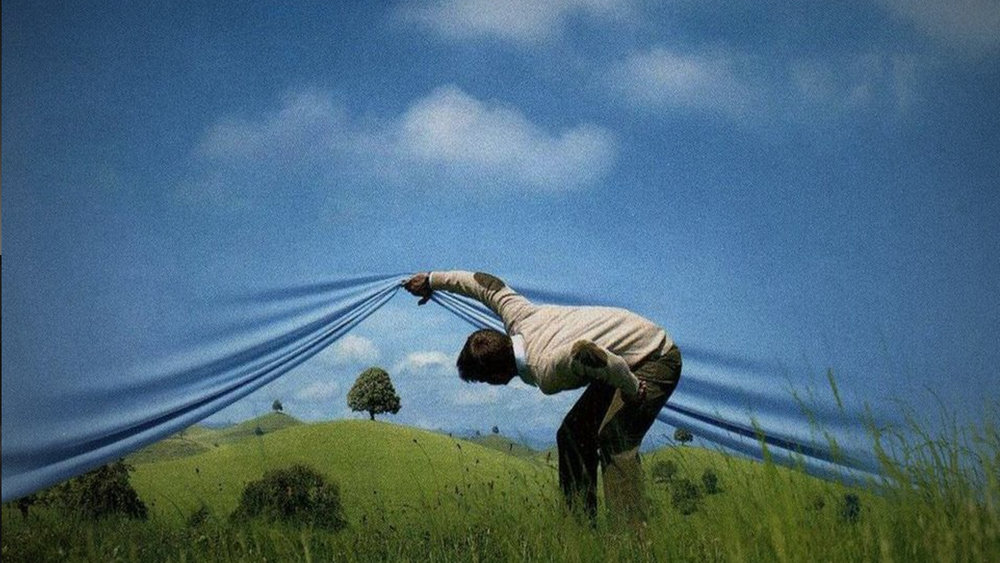
How are we to live? It is a simple question that few wrestle with these days, and yet, in years past, many of the brightest minds could not seem to get past it. Have we evolved past this issue? I think each of us care deeply about how we live, but our concern for others, well, that seems to have waned these days. If only life were that simple. If our only concern was our life, that would be so much easier. The harsh reality is that our life is interconnected with other lives in a variety of ways. We are in families; we live in neighborhoods. We work with others; we socialize and worship with others. We are connected whether we like it or not, and yet, many of us live as if we are not, even when that connection is an important part of who we are.

If our only concern was ourselves, would it matter how we live? I am not sure it would. What would we be saying about our perceptions, assumptions and judgements? We would be asserting that they are always correct, because, in essence, they are, if our world is only about us. So many in our world live this way today, and yet depend on many others for their world. We see this attitude on the news, in government, in professional sports, in Hollywood and even, sadly in some churches. Addiction to self is a scary thing that can overtake all of us if we are not careful, but one of the remedies is to look at what you have and ask, why do I have it? News professionals depend on those who watch them. Government officials depend on those who elect them, and the pattern continues for professional athletes, actors and musicians. Be wary of thinking you are the center of your universe because eventually you will realize, either by self reflection or harsh reality, that you are not.

A concern for how we are to live is more complicated you than might think. It is actually a concern for others, a desire to live a proper life, an intent to be honorable, truthful … you get the idea. We live in strange times. Everything we do these days seems to push us deeper into our own little world. We seek to live in our own private Wonderland, and today, we can through technology. Everything can be about us because an egocentric world is acceptable and even promoted. Not only are you living for yourself, but you are being given the means to do it more and more. You can spend hours online … by yourself. You can communicate with the world … without leaving your home. You can even work from your home. These trends push us away from others and deeper into an addiction to ourselves, which is our own private Wonderland. Let me ask a question: do you wake up each morning, slide to the edge of your bed, and before your feet hit the ground, ask your self how you should live today in consideration of others?

Many wrestled with this question in the past for good reason. The picture above is from a book by Hugo Grotius entitled, “On the Law of War and Peace.” In his book, he argued that international law should be based on natural law, which is derived from human reason. One of the assumed truths of natural law is the belief that moral principals and rights are inherent in human nature. These rights are believed to be revealed through human reason. You can probably guess the assumption natural law makes about the nature of man. Those who ascribe to natural law also embrace the “overlap thesis” which asserts that law and morality are intwined (they “overlap” each other) and indwell in us, and it is this indwelling that moves individuals to inherent acts of goodness. This “overlap thesis” has been a huge part of educational theory and therefore, it has become part of the fabric of life in the West. We depend on our reason for everything. We rarely do research, study the facts or take our time before making decisions these day, and it is because of the overlap thesis that we do this. We live as if we are morality and that our logic and reason are without flaws, and we can do that because we live in Wonderland where we are morality. We can only live this reality if life is about us. If we are concerned about others and seeking to live a life of honor and integrity, well, Wonderland becomes a nightmare.

When considering how we should live, there is an important question we must ask. What is the difference between good and evil? In our current discussion, this question seems to be fairly important, especially in regard to how we are to live. Are they relative? Is living for self with no concern for others an inherent act for good or for evil? If we live in our corner of the world and do not infringe on others, are we being evil or good? Depends on what you are doing, right? Can we say we are living for good when we our only concern is for ourselves? If we isolate and self protect, are those considered acts for good, even if to do both means infringing on someone else? These are all hard questions, and every one of them depends on what you consider to be good. If goodness is defined by you then the world is your oyster and there is little that would be defined as evil, but if you are a citizen and in community with others, then living your life just got more complicated because you must consider their views as much as your own. If you do that, then you are no longer in Wonderland.

Today, everyone is quick to judge others with little concern for others or even worse, little concern on whether their judgements are true. We tend to make everything personal and when we live in isolation (When I say isolation I mean either living by yourself or living in a small community where everyone holds the same absolute beliefs.), everything becomes personal, and the idea of truth becomes hard to find. What if we are wrong? What if our perception is false or there is another explanation? Can we know the intent of the heart or the motivation behind one’s actions? We cannot and yet we live as if we have that power because we are increasingly living lives that are isolated and self-centered. I don’t see a lot of self reflection, humility or accountability taking place in the world. Even when caught in a lie or in a wrong accusation, most will offer no admission of guilt, no apology and no path towards restoration. We need to only look at our own politicians for countless examples of this. For me, the issue comes back to truth. Do we care about what is true and right anymore or do we care only about ourselves?

Truth, commonly defined, is conformity to fact or reality, but what if we are our own reality? The more isolated we become, the more truth becomes relative. How can we determine what is true and right without community? I don’t think we can and in our current state, I don’t think we can expect to move closer to truth, especially when we live in Wonderland. Everywhere we look community is breaking down, which, in turn, breaks down life the way it is meant to be lived. It is community that holds us accountable and teaches us right from wrong. It is the older who teach the younger about truth through experience in community, which brings us back to the question, how are we to live?

I close with this. Dark and light are not opposites. Dark is the absence of light. I think good and evil are the same. Evil is the absence of good, but what if we are the good? Can there be evil in Wonderland? I don’t think there can, which is our problem. Today, most believe man is inherently good and evil is an after thought, but a look at culture will immediately question that thinking. Can we find truth by ourselves? Can our actions always be good if we are the judge and jury? Speaking only for myself, an emphatic no! However, I think the question, “how am I to live” is a good place to start. If you are asking yourself that question, then, I think you are stepping on the right path. If you are not, then maybe you should get off your current path. Living in Wonderland is a great thing until you become tired of yourself, and we all eventually grow weary of even ourselves. We were created to be in community! Blessings!

How Do We Know What Is Real?

How do we know what is real?

I took a trip back to where I was raised to visit family and friends. It was a wonderful trip but quick and too short, but that is sometimes life. It was good for my soul and even better for my mind. I loved all the conversations I had. I loved listening to how others arrived at their own points of view. Some of us still hold the same values and have adapted to life in some of the same ways. Others hold different values and have adapted to life in different ways. Why? One of the subjects that came up was reality and how many different versions of reality are out there now. As I was driving back home, a question came into my mind—how do we know what is real? —and I could not shake it. 

My standard practice when I get one of these questions is to go poking around those people I respect, read or follow and see what they think. In my latest search, I stumbled upon a reference to an article with an interesting title, so I looked it up and read it. The article was in Psychology Today, which, for me, is not one of my usual references, but the title was too inviting. The article, “How Do We Know What Is Real?” By Ralph Lewis, M.D., was well worth my time and maybe worth yours too. Before I get into the article, let me set some foundational timbers for this post.   

First, let’s be clear; we experience the world through our five senses; that is given. Second, it is best to experience the world with all five of our senses. Most agree on that point as well. It is the way most of us live and we give it little thought. We just do it. Point three: Most theorists would call this experience subjective and question its reliability, but Lewis points out that “subjective perception” is still a crucial source of data for almost everyone. We rely on it every day as we live our lives. Consider science, even its practices and methods incorporate senses, i.e., observation, which is technically considered subjective and yet still a foundationally part of the scientific method. Dr. Lewis writes, “Science is just a method to minimize the distorting effects of our perceptions and intuitions and to approximate a more objective view of reality.” This is intuition and it is and should be greatly valued. You use it and so do I. It is the primary focus of this post. Most professionals use it. They depend on their own “trained” intuition to do their job. Doctors, financial advisors, plumbers, teachers, engineers and many others, all use trained intuition to excel in their vocations. 

But here is the issue I want to focus on; trained intuition is not universal absolute truth nor is it reality. It is a form of discernment that allows us to problem solve. It is assumption and inference developed through our education and training that works with who we are to solve issues. It is also based on our ideology which is a composite of our beliefs and values. This makes it uniquely ours, and it tends to work only for us. But this means that we often see our intuition and as reality. In some respects, it is, but it is not ultimate reality for us. The more success we experience the more egocentric we become, and this puts us in a position to think our reality is everyone’s reality. It never is. Your doctor may have an intuition about why you are sick, but that is the result of his or her interaction with you and your issue. At best, it is a temporary situational reality that works for your current situation, but that is as far as it can go. As Lewis states, “But it [intuition] can be completely off base” and lead even experts astray.” Lewis continues, “We have to be aware that our intuitions and firmly held assumptions may be completely wrong.” This leads me to a question. Where does intuition lie? The answer is the brain. 

The brain is a “well-honed but imperfect virtual reality machine,” according to Lewis. We don’t have a brain; we are a brain. Our brains produce subjective perceptions which are representations of our external world—our very own form of virtual reality. According to Lewis, we can be confident that most of the time these subjective perceptions that our brains produce are faithful representations of our actual external world. Social cues are just one example of our brains making a subjective perception. In most instances, we are right, but I think we have all experienced a time or two when we were wrong. 

Our brains, according to Lewis, rely on patterns, approximations, assumptions and best guesses. Our brains often take shortcuts, fill gaps and make predictions and all of these things are based upon our intuition which flows from those subjective perceptions. Lewis is clear; subjective perceptions are real, but they are not what they seem, even to those of us who own them. The brain is a “confederation of independent modules,” all working together. Lewis writes regarding this, “The vastly complex unconscious neuronal determinants that give rise to our choices and actions are unknowable to us.” 

The brain just works, and it works well due to the subjectivity of our experiences, but, as real as they seem, they are not reality for us, and they cannot be reality for us. The more successful we are the more our tendency will be to think that our reality is everyone else’s reality, which, again, is when we get in trouble. When we push our intuition as if it is reality, then we will think it is reality. When this happens, we merge our intuition with our existing ideology, and they become one. We will always find others who share and reinforce our ideology, then it is our ideology that becomes our reality. This tends to isolate us inside our ideology which becomes our ultimate reality. This is the Land of Oz and not reality at all. This is where real issues arise in the form of narcissism and nihilism.

Lewis goes into mystical experiences and hallucinatory or dissociative experiences to make his point. He posits that these experiences seem so real to those who have them that they believe that they have discovered a transcendental reality. They have not discovered an alternative reality. They have merely experienced the power of a chemical or drug or the power of suggestion. The brain thrives because of subjectivity, but that subjectivity makes it vulnerable to external influences like drugs and persuasion. We would be naive to assume that our subjective perception of the world was anything but that, and yet this is where many are today. There is no longer a concern about doing the right thing, working hard, having integrity, honor or even telling the truth. The only concern right now is for self … to be right. We are in a war of opinions, and everyone is armed with their own editorial comments. The battles wage because the winners get to declare what is true, until the next battle comes, and then, the cycle starts all over again. This is our world today and determining what is real is no longer determining what is true. Our elections have revealed that, have they not? How do we know what is real? I think the better question might be, do we care about what is real? Until we do, we will never determine what is real.