

“A dead thing can go with the stream, but only a living thing can go against it.”
G.K. Chesterton
“A dead thing can go with the stream, but only a living thing can go against it.”
G.K. Chesterton

Here is another profound quote to add to our collection. Enjoy!
“Everyone thinks of changing the world, but no one thinks of changing himself.”
Leo Tolstoy

Comments on the News:
This week Homeland Security Secretary Alejandro Mayorkas announced that a Disinformation Governance Board had recently been created to combat online disinformation.
Whether you lean left or right, this should alarm you if you care about freedom. Let’s start by addressing the timing of this announcement. I do not believe in coincidences so the timing of this happening immediately following Elon Musk’s purchase of Twitter makes the timing suspicious. There is no denying that Twitter was censoring expression prior to Musk’s purchase, and we do not know yet what Twitter will be like under Musk, but there is hope that expression will once again be free.
When it comes to expression, there are only two choices; it is either free or it is not. It is a fallacy to suggest that freedom can be governed; it cannot. Governance is control according to a prescribed standard. What Twitter was doing prior to the Musk purchase was not freedom of expression but the control of information. If you want to control the distribution of information I do not have a fundamental problem with that if you present it as the control of information.
Words do mean something and a case in point is the word “disinformation;” it is a poor choice if you ask me (I know, no one has asked me.). Defined, it is “false information which is intended to mislead, especially propaganda issued by a government organization over a rival power or the media.” Semantics are important and the semantics of this word produce a few questions. Is there such a thing as false information in an age relativism? Who gets to decide intent? Can we truly discern intent? Propaganda, according to the semantics of the word disinformation, is that which is issued by the government over a rival power or the media, which presents a dilemma … is the government’s oversight of disinformation—as defined, an oversight of its own intention to misled in regard to information—possible?
But again, I refer back to the idea of governing freedom. If you are governing freedom it is not freedom. You can protect freedom; you can protect those who are free; you can even protects the rights of freedom, but as soon as you start to govern freedom and decide what is freedom and what is not, there is no longer freedom.
Failing to see that this Disinformation Governance Board(DGB) is a power grab means your ideology is currently in power, and that is fine. All is fair in love and war, but let’s avoid addressing the issue as one of freedom. It is clearly not an issue of freedom or even an issue of ideology; the issue is power and the desire for more of it.
I would encourage us to read our history because we are on a very dangerous path and if we stay on it the future of our country, which includes its diversity, is at risk because diversity is the first thing to disappear when one ideology controls all others. Here is what we know about history if we read it. Those in power currently will not remain in power forever; they never do. History and culture operate like a pendulum; the more you push the pendulum one way the more it will swing back the other way, and it will always swing back the other way … eventually. The goal is for there to be a balance in life, but the more power one side accumulates the more that side wants things according to its ideology. This equates to pushing that pendulum, and again, just like a true pendulum, the more you push it one way the more it swings hard the other way, and it will eventually swing hard that way one day.
There is no way to come to a logical conclusion that the purpose of the DGB is to protect freedom of expression. It is clearly to protect the interest of an ideology so let’s avoid insulting the intelligence of the populace by presenting it as a means of protecting freedom of expression. It may be many things but it is definitely not that.

“People don’t like to think, if one thinks, one must reach conclusions. Conclusions are not always pleasant.”
― Helen Keller

Part Four: Our Response
In the past, to live in community meant that we had to know who we were and what we believed and valued. Community granted each of us the right to be different and to have our own unique worldview. Today, individual difference no longer matters and different worldviews are not welcomed. It is culture that is king and we are its servants in this new world of pseudo-reality.
Living in pseudo-reality reduces life to reactions. There is a “testing of the waters” to determine the pressure points of culture and an expectation to adjust to those points. We can’t stop looking at our phones, checking Facebook and Twitter and updating our status … each is a means by which we adjust to culture. And, each adjustment makes us more insular, more addicted to ourselves and more comfortable with the external impact of culture on us. We have slowly become conditioned to live a life that, to be honest, is something less than human.
Socrates taught us long ago that failing to examine one’s own life renders it worthless, and yet, most of us don’t even consider self-examination anymore. We are too busy pointing out the flaws others, forgetting that we are just as flawed. Not too long ago we were admonished to be tolerant of everyone, to strive for equality and to fight for freedom of expression, and yet, today, we fight for none of these things … in fact, we are now encouraged to fight against them. There is no longer tolerance, only judgement; those stiving for equality no longer want it, and freedom of expression has been exchanged for a specific cultural vernacular to which everyone must submit or risk severe consequences. And yet, we are still told that this is freedom. I don’t see freedom; I see something very different.
What we are seeing today is a total capitulation to culture. Each day we test the “proverbial” waters and then, we adjust our lives accordingly. This reduces our life to daily aberrations which pull us further away from who we really are—providing us no comfort and certainly no purpose—while pushing us towards something less than human. We have actually stop thinking and become a reiteration of our culture.
Sadly, culture has vanquished the individual worldview and declared it defective. We now live in a pseudo-reality that is plastic and one dimensional … one that positions us into a constant state of anxiety due to our daily struggle of determination, which is, in essence, the process of getting. We must get our values and beliefs from culture. We must get our worldviews from culture. We even get our language from culture, and whether we realize it or not, we now get our approval from culture as well. We have become so conditioned to getting that we are losing our ability to give, except when it comes to worldviews, which we have given to culture without much of a fight.
Giving is a distinctly human action; it is one that separates us from all other creatures. Without our own unique worldview, we are reduced to that of an animal seeking a survivable habitat. In the animal kingdom, it is the habitat that is king and all animals submit to it. Sound familiar? We actually have stepped back into time, back to the daily struggle of survival, but instead of fighting for food and water we are now fighting for our soul and our humanity.
All hope is not lost however! There are answers and all of them begin where this journey began … with worldviews. How you see and perceive the world will determine who you are in the world. Understanding how worldviews work and that they are under attack is a good first step but it is only one step; there are other steps and each of them are difficult. The next step is perhaps the most difficult. We must understand the power education has over our worldviews because, like it or not, education has a lot to do with who we are today.
The foundation of your worldview began way back in grammar school when you were taught math and English by a teacher who also taught you something else … what is right and true. Every school, no matter its orientation, teaches from a view of the world which defines what is right and true for its students. Worldviews begin at home but they are always built in conjunction with schools because every child goes to school.
As parents, we trust our schools with our children in regard to academics, but what about beliefs and values? Have you ever asked whether the school’s beliefs and values, which the school presents as true and right, align with your beliefs and values? The dirty little secret that no one wants to talk about is this one: as soon as your children reach middle school, if they participate in just one extra-curricular activity, they will spend more waking hours at school than they will with you at home.
Back to Socrates, he proclaimed that when we examine our lives we are living lives worth living, but the exam he referenced is not a one-time exam; it was a constant and thorough examination process that was to be lifelong. I think part of what Socrates was referencing was the refining process of worldviews. When we examine our lives we must examine them in regard to who we are and where we fit in this world. We must be willing to make changes, reinforcing some beliefs while eliminating others, but this is all to be done internally as we interact with others, learn from others and grow with others.
A consistently examined life is one that is truly free. It is a life that is reflective and not one that is constantly reactive. A life worth living gives more than it gets. It seeks to understand others. It is humble and different. What is the answer to this attack on individual worldviews? Examine your life to determine whether you are living a life worth living, engage the world with who you are in a humble loving way and embrace the old biblical adage that it is better to give than to receive (or get) and then you will understand why worldviews are so important, why defective worldviews are so destructive and what makes you truly human. Here’s a hint … it is not culture.

Part Three: Reality
In our last post, we established that each worldview is a set of beliefs lived out in the world in response to others and their worldviews. All worldviews require a commitment on the part of each individual in order to be lived out in the world. Worldviews not only define who we are but they also provide each of us with a sense of community, a sense of purpose, a set of values and more … and they do this through our commitment to them and our refinement of them.
We demonstrate who we are through our worldviews. The consistency of living out a worldview actually reinforces our worldview, which develops who we are from the inside out. As we live out our worldview we refine it, deepening some beliefs and eliminating others; this refining process allows us, over time, to develop a sense of who we are and an assurance that we do have a place in this world, and it all happens internally.
What happens when worldviews are defective? We begin to look outside of ourselves for worldview answers, which reverses the process. What was an inside-out process, that positively impacted us, becomes an outside-in process that is a detriment to us, manifesting as irrational behavior searching for the consistency that is now absent. Defective worldviews create anxiety and confusion in us due to an external dependence on culture. Instead of refining beliefs and values internally, we are now constantly searching externally for our beliefs and values, reacting in emotion to each situation and doing it differently due to our actions now being impacted by our emotions and different situations.
The neat clean internal process of worldview development is now a muddled multi-layered messy external process. The consistency found internally is not found externally as culture is a multi-faceted changing landscape of diverse and peculiar ideas that are always shifting. Culture will ultimately provide us the worldview we seek but it will always be provisional and short-lived as more change will soon come, as it always does with culture, providing no solace nor the consistency we seek.
A defective inconsistent changing worldview rooted in culture undermines our common sense, changes our moral orientation and destroys our empathy for others. We become negative, judgmental and unsympathetic. Our tendency is to live for ourselves in response to the culture through our emotions. It is our emotions that become the means of determining cultural change and as we continually adjust to those changes and that continuous adjustment impacts us deeply. A focus on emotions erodes away a factual objective reality, producing a subjective pseudo-reality that is now needed to support and feed our emotions, which have taken the place of beliefs and values.
A pseudo-reality is not real. It is pliant, inconsistent and situational. There are no absolutes in pseudo-reality. Truth is elastic and changes with each situation, which are impacted by power structures, theories and trends. The only consistency is change and nothing makes sense because there is no need for anything to make sense in pseudo-reality. Inconsistency is the only rule. Everyone seemingly has power which, in essence, gives no one power. In pseudo-reality every situation and circumstance is its own reality with its own set of rules. This turns everyone into a judge with no forgiveness or concern for others.
Worldviews of the past die in pseudo-reality because they need to be refined and require an objective consistent reality for such a process. What brought us comfort through an internal refining process that sought consistency through clarification is no longer viable in a pseudo-reality. Pseudo-reality is a subjective ever-changing reality that seeks to fill our need for a worldview—and each of us needs a worldview—with itself.
Pseudo-reality adjusts to each situation and circumstance and through this process of adjustment places itself at the center of our lives because it is the only constant we know. There are no objective beliefs or values in pseudo-reality only emotions and they are always changing and reacting depending on the situation or circumstance. Where beliefs and values were deeply held and grew toward consistency, emotions, instead, are reactive, temporal, selfish and always inconsistent. They will never consider others and always be erratic and mutable. This is the world at our doorstep. How do we deal with this world? Stay tuned for our final installment of this four part series.

Part Two: Worldviews
Mead, in Types and Problems of Philosophy, acknowledged that there has always been factors at work seeking to undermine or constrain our worldviews, but he also acknowledged that this was one of the reasons these elements were to be in concert with each. I will go one step further and posit that it is the union of elements that has always provided the protection in the battles to undermine or constrain our worldview. When these elements are in concert they are a strong and a formidable protector, but when they are not, they become very weak and vulnerable. Mead suggests that the concept of worldview is no longer important to most today; very few think about worldview and even less know how to articulate it to others. Even more alarming is that we are now conditioned to accept that these elements of our worldview, meant to be in union, best serve us out of union with each other. Through critical theory and offshoots of it like pragmatism and situational ethics, we have become immune to the consistency, openly embracing inconsistency as a norm.
Mead referenced that these elements that make up our worldview are, in their strongest state, interrelated so intricately that it would be almost impossible to speak of one without speaking of several others in the past, but that is no longer the case. This interrelation was akin to an interwoven fabric and the “knitting” (refining) of this “fabric” provided us purpose and meaning and the means of making sense of our world as we refined our worldview. Mead highlighted the powerful impact of worldviews when he stated that even impulsive or reactive action is based somewhat on worldviews.
Of course, Mead is right. Worldviews are powerful and responsible for most of our behavior but what if there are circumstances that undermine the impact of a worldview? Action is based on reasoning which is based on our interaction with the world, and our interaction with the world begins and ends with our senses as we encounter stimuli from the world through them. Reasoning or thinking is a process rooted in a sequence of actions in which encountered stimuli from the world, interact with our own knowledge housed in our long term memory, which results in new or adjusted knowledge, prompting most of our actions. These have been sorted out in the past through the consistency of our worldviews. In the past, those elements making up our worldview would be in concert with each other in such intimate ways that beliefs in contrast to them would be easily and quickly filtered out. That is no longer the case.
As I referenced earlier, some of our actions are reactions to emotions or environmental circumstances, and these reactive actions are not impacted by worldview in the normal sense due to their nature, but these were not the vast majority of our actions. Today, I believe one of the goals of critical theory is to position every action and thought to be treated as if they are reactive, rooting them in emotion, feeling and sensuality and not worldview. In the past, when it came to thinking or reasoning, both were primarily impacted by our consistent worldview, but with the elements of our worldview falling out of concert with each other the results are worldviews that are fractured or nonexistent. Couple these fractured or nonexistent worldviews with the growing normalcy of inconsistency and we become anxious people.
Our worldview, which was the governance of our thinking and reasoning in the past, has become compromised, no longer functioning as a filter of sorts; instead, they have become fractured or nonexistent, opening up the flood gates for every belief, regardless of its origin, to be viable to us. What would happen if our thinking or reasoning were no longer impacted by worldview but instead became a reaction? Our thoughts and reasons would no longer be filtered by our deepest beliefs which live inside our worldview; instead, there would be no filter, leaving our emotions, our feelings and our sensuality—all impacted by situations and circumstances—as the filter to our thoughts and actions. It would equate to practicing medicine according to feeling and emotion, ignoring the accumulated knowledge and training available. The results would not be good, and yet, this is where we find ourselves today. How should we respond? Stay tuned for Part Three!

In matters of style, swim with the current; in matters of principle, stand like a rock. —Thomas Jefferson

Part One: Our Problem
As we look at our world, what do we see? Confusion … chaos … anxiety … all of them affect us in one way or another. There is a more perplexing issue at work … one that has deeper implications for us: the issue of fractured and nonexistent worldviews. These are actually one of the byproducts of critical theory. This post is not about critical theory; that is a post for another day. This post is about the manifestations of critical theory and what it is doing to our worldview. Let’s start by developing a proper understanding of the worldview.
The term worldview actually extends from the German word, Weltanschauung, which presents a worldview as an intellectual perspective on the world. This clarifies why critical theory has made such an impact on culture. Critical theory is not so much a theory as it is an intellectual perspective on the world, an extension of the Frankfurt School, which originated in Germany.
In the book, Types and Problems of Philosophy, Hunter Mead defines Weltanschauung as an “all-inclusive system of philosophy” which he presented as un “unconscious attitude” toward one’s life and world developed over time. There are also references to James W. Sire and his work in regard to worldviews. Sire actually goes deeper when he labels Weltanschauung as a “set or presuppositions” which we believe about the world that informs our actions in response to the world.
Sire’s view of Weltanschauung is helpful in our discussion of defective worldviews because he discusses the manifestation of them as they are lived it out in conjunction with others. There are different elements that form the composite of a worldview, and these elements are to be in concert with each other. There are many different views in regard to what elements compose a worldview; here are the elements we embrace in regard to worldviews:
These elements bring to light our primary problem: these elements, which in worldviews of the past were aligned and in concert with each other, are no longer aligned or in concert with each other in worldviews of today. Under normal circumstances all of them came together to form a picture of the world which defined for us both our world and who we are in the world. What happens when each of these elements are out of synch and out of concert with the others? We begin to not think about worldviews anymore? Or, worse we produce fractured worldviews, or worse, yet have nonexistent worldviews, which force us to begin to look outside of ourselves for ways to define ourselves and our world. When we look to our culture for worldview answers our worldviews are affected and eventually changed. How are they affected and changed? In Part Two, we answer those very questions and more!

“This history of culture will explain to us the motives, the conditions of life, and the thought of the writer or reformer.” Leo Tolstoy

“There are always two people in every picture: the photographer and the viewer.” Ansel Adams
This quote is a precursor to a coming post; stay tuned!
Pictures in the News
Have you ever noticed the kind of pictures used by those in the news? It is no coincidence that those pictures used in reference to anyone or anything representing an alternate view of the world than the one expressed by that particular news agency are often awkward and unflattering. A picture is worth a thousand words, so the adage goes, and it appears that this old adage is actually true.
Researchers at Michigan State University speculate that, “The part of the brain responsible for seeing is more powerful than previously believed.”
In a study in which they looked at which parts of the brain were active during a series of visual stimulations, they found that the visual cortex, responsible for vision imaging, has the same ability to make decisions as the brain’s “higher-level” decision-making areas.
Most previously thought that only the association cortex, known for higher-level functions, was responsible for decision making and that the visual cortex was only responsible for processing visual information. Recent studies are revealing that the visual cortex actually impacts decision making through visional interpretation. The research suggests that this part of the brain, once thought to only be responsible for generating a picture in the mind, also has the ability to influence decision making.
Another study found that photos of food were able to influence children in regard to their food choices. The study conducted by researchers at Iowa State University found that the salad consumption of children increased by as much as 90% when shown digital images of a salad or the vegetables in a salad.
One study added a digital display of rotating images of salads to a cafeteria in a summer camp of children aged 6 -12. Once these rotating images were displayed, campers were more likely to choose lettuce, cucumbers, tomatoes and carrots from a salad bar then they were before seeing the images. The researchers contributed the rise in vegetable choices by the campers to the images.
So, a picture is worth a thousand words and does drastically impact our thoughts, attitudes and behaviors. Placing an awkward or unflattering picture in a news story will greatly influence our perceptions of that news story. The news has never been just the news, but now we have a little more insight into why!

From time to time, we will issues comments here about stories found in the news. In these posts, we will present our view of the news and why we feel it is important to comment on the story referenced.
Here are a few unfortunate truths about the current state of the news. First, the news is not the news any longer. Each news network presents the news from their prescribed view of the world, and before you think that this some sinister plot to change the world, let’s agree that it is not. This is merely appealing to one’s base, which is the chosen worldview of the network, which makes sense. Second, because each news network has a base, each will always proactively seek to increase their base and each will do this because it is the base that makes each one sustainable. Third, the news is not neutral and never has been neutral. A news story has always been presented from a certain perspective of the world. In the past, we have enjoyed a more collective view of the world with many common points of agreement. Today, there are precious few points of agreement, which makes the news seem more bias than ever, but the reality is that it is pretty much the same as it has always been, with a few exception. Finally, the news has made one massive change that has greatly affected its accuracy and excellence. It is no longer about getting the story right as much as it is about getting the story out before everyone else gets the story out, which, as you might guess, affects accuracy and excellence.
Because of these four primary reasons, and a host of secondary ones, we will feel the need to make comments on the news from time to time. What will our comments be like? Our goal will be to determine whether the story is true, false or a combination of both. We will not comment on every story, but when we do comment we will always seek to present the truth of the issue in order for you to make sense of your world. Unfortunately, there has been an increase in stories that are not accurate and as long as networks get away with being inaccurate there will be an increase of misinformation, which, as you have already surmised, affects all of us.
We feel this part of who we are because we believe thinking matters!
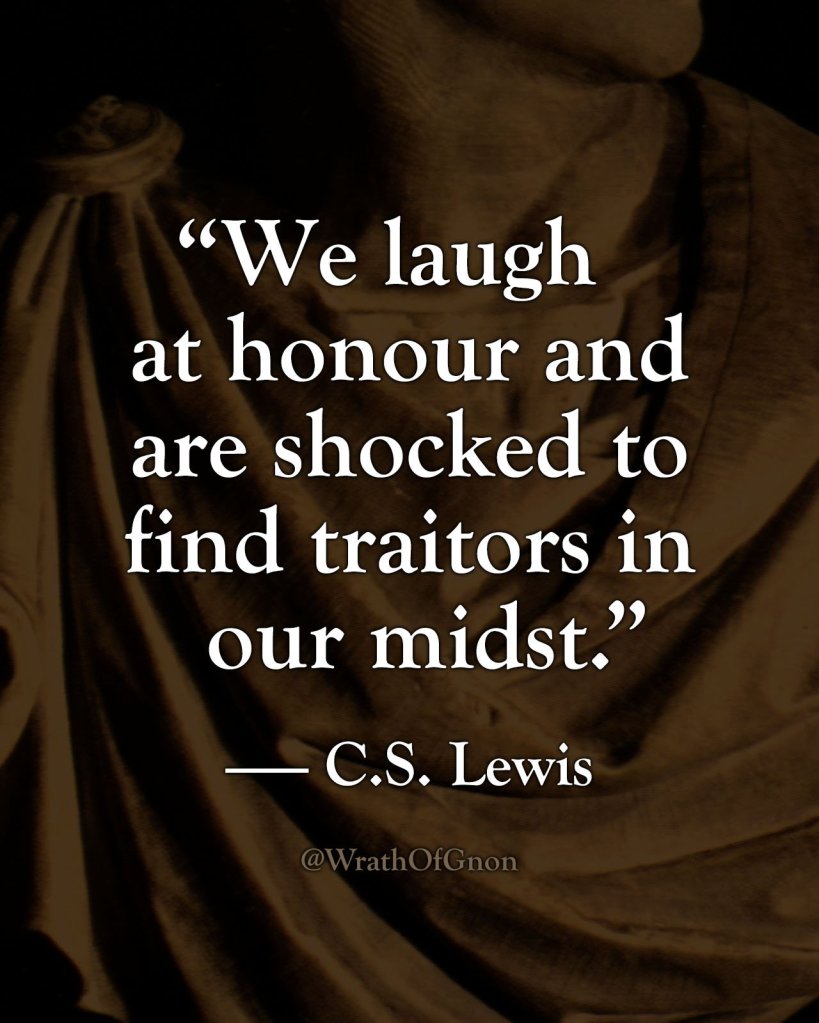
From time to time, we will post quotes in this section which we have entitled, A Collection of Quotes. We will keep them under this category in order for them to be easily accessible. We hope you enjoy quotes as much as we do. Our first quote comes to us from C.S. Lewis. We think it is pretty relevant. Enjoy!

Ukraine: Another Example of our Problem
As I watch the events in Ukraine unfold in real time, I can’t help but think of my time there. I loved meeting the people, walking the beautiful city streets, learning its history, experiencing its charm and partaking in the slower pace of Ukrainian life. Watching what is being done to that beautiful country breaks my heart and forces me to ask the question, why?
Why is this taking place? We never seem to learn our lessons. Our history does not hid the fact that war destroys everything it touches, and yet, here we sit in 2022 watching a war that seems like a newsreel from times past. Shouldn’t we be better than this by now?
Like it or not, this is our world. Yet, we keeping hearing about how we are evolving and getting better. I don’t see it. I mean in the midst of war we are still speculating on whether the pandemic was caused by a man-made virus from a lab or not. There are still calls to defund the police even when actually doing it has produced more crime, and now we have a war between Ukraine and Russia. What is wrong with us?
Well, it is really quite simple. Left with unbridled power and no accountability, human beings tend to choose wickedness more than peace. We do not see our struggling neighbors across the border as those in need; instead, we see their struggle as an opportunity for the accumulation of power. We are hopelessly addicted to ourselves and we only need to look out the window to confirm this as true.
What would the world look like if we were actually getting better? Well, we would wage peace and not war. We would give more than we get. We would celebrate difference and not divide over it. There would be road goodwill and not rage. Those with the most money would be those who give the most money. Our politicians would serve their constituents instead of themselves. We would need help managing our peace and not our anger. We would partner with other countries instead of invading them. Unfortunately, those are not reflective of our world.
As this war drones on, I fear this is just the beginning of the conflict we will see in our future. We undermine morality and promote selfishness to create larger profit margins then when it takes a sinister turn we are shocked and confused. None of this should be a surprise to us! Someone told me long ago that absolute power corrupts absolutely and I continue to see examples of this and yet, I still hear politicians on both sides of the isle tell us with a straight face how their party needs absolute control. If this does not insult you to the core then you are either not paying attention or do not care.
The war in Ukraine is another example of our problem … we still do not understand who we are as human beings. Until we do that, not only will we not understand each other but we will never ever get along with each other either. I hope I am wrong.
 Bridge Roe: Where Thinking Matters