
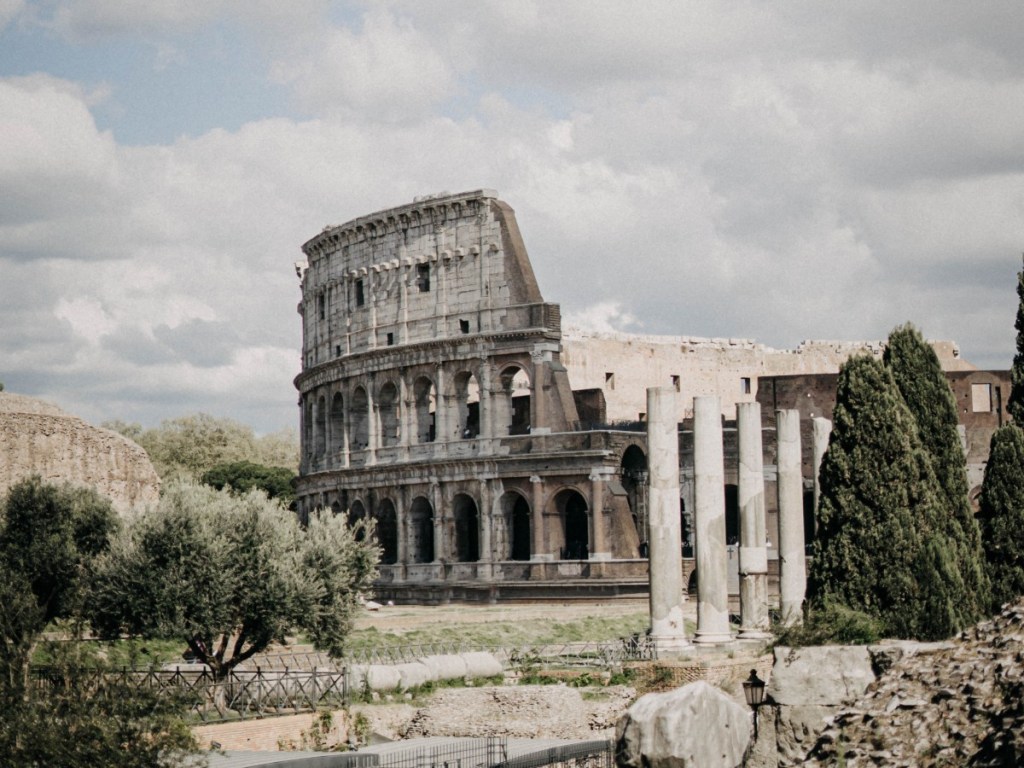
Part II: Western Civilization and Christianity
We, in the West, love our freedom, our liberty and all the choices afforded to us. We love free speech, the right to an education and class movement. We vote, are free to be critical and free to believe different things, if we choose. All of these “rights” are ours, at least we believe that they are ours. There is just one minor problem: these rights we claim as ours are found only in the West and nowhere else. They are not really ours but on loan to us from the West, which begs the question, why, then, is the West in decline?
I ended my last post suggesting a connection between Christianity and the West, and in this post, I am going to defend that suggestion. Whether you believe in its truths or not, and you are free to do both in the West, there is no denying the impact Christianity has made, not only on the West, but on the entire world. Many of the beliefs, the values and the traditions we hold dear came to us in the West and from the West, and most of those came to us, like it or not, from Christianity.
When Christianity entered the world, it came into a world that was a mixture of Roman, Greek and Jew. There were three, Rome, Athens and Jerusalem, major civilizations in the world at the time, all trying to conquer each other, but it was Christianity, according to Gregg, that did the conquering. It made the Jewish God of Abraham available to both the Romans and the Greeks while also appropriating and transforming much of the Jewish thinking into a synthesis of reason and revelation. It was Christianity that changed the world by granting rights to those who had never had rights and introducing change that applied to all people. These ideas morphed into what is known as the West and “Western” thought today. According to Gregg, all of it came out of Judaism through Christianity. It was Christianity that introduced three major ideas that were new and radical; it was these three ideas that contributed to the development of this distinct “Western” culture and “Western” mindset.
These three ideas were distinct to Christianity and, as we shall see, versions of them were foundational to Western Civilization. First, reason was viewed as divine, which suggested that the world was created by a Holy God and had order and purpose. Second, there was the idea that all human beings had reason and could employ it with assistance in redeemable ways to know truth, including the moral truth of a Holy God. And third, this Christian revolution started by Jesus Christ emphasized a new form of freedom that the world had never seen before. It was a freedom that unfettered all human beings from rulers and their power and provided them a means to a Holy God and to their own betterment. These three ideas changed the entire world and forms of them took root and became foundational to the West as we know it today.
Those three Christian ideas that changed the world have morphed into three tenets of Western Civilization that we assume to be our own natural rights. They have become a bit distorted over time, but they are still very much alive and active today in the West. We assume they are distinct to the West and products of the West when their geneses are rooted in Christianity. We don’t’ think about them. They are ours, and we assume that they will always be ours because we possess them and have always possessed them. They are part of our normal, our worldview and our paideia if you will. These three ideas are distinct to Western Civilization, and yet they are even more distinct to Christianity, although they are better known by their Western nomenclature. What are they? Well, you will recognize them because they are you and me. These three ideas are three rights we take for granted and call our own; they are the right to an education, the right to a democratic way of life and the right to personal freedom. Each one came to us, not from the West, but from Christianity and along with a host of other “norms” now residing in the West.
Those three ideas created a revolution of sorts that changed the entire world. They gave everyone power that had only been reserved for kings and queens of old. They put totalitarian regimes and those like them on notice, offering something else, a better form of government, and as much as we want to, we cannot ignore their connection to Christianity. It was Christianity that was affirmed as “the true philosophy” by Clement of Alexandria and lauded for its “integration of faith and reason.” It was Christianity that produced churches, hospitals and schools, including the university, which was founded for the training of the church’s clergy and for the pursuit of truth for the sake of truth. This one product (the university) was a statement on the change that Christianity brought to the world. You can find the university in almost every country in the world today and in its vision, you will find a pursuit of wisdom and knowledge. This educational pursuit was a pursuit that the world had never had the liberty, the ability nor the desire to pursue until this Christian revolution, and all of it was rooted in a belief and in a conviction that there is a Creator God who created a world of order that could be known. Today, our colleges and universities have all but forgotten this connection, but they owe their very existence to Christianity.
There is wonderful book entitled, The Dying of the Light, that traces the origins of all colleges and universities in the United States. The striking point about this book is that almost every college or university in this country was originally the product of a denomination … the product of some form of Christianity. The Congregationalists, the Baptists, the Presbyterians, the Lutherans, and the Catholics … every denomination that created a colleges or university is in that book and almost every single college or university that was created in this country is in that book. The point not to miss is that these institutions of higher learning were created, in part, due to a mandate from a Holy God and a conviction that this God created a world of order that could be known and should be known, which prompted a curiosity and a desire to learn more about this God and the world he created. One author put it this way, “It [Christianity] launched an age that saw the world as characterized by order, that the human mind can comprehend and a world that merits study simply because it is the world of God.” So, when we talk about the West, in most instances, we are taking about Christianity and its impact on the world.
It is the West that ushered in the study of science, mathematics and medicine. It is the West that employed democracy in real time and presented it as a better more copious option. It is the West that concerned itself with poverty, slavery and racism, albeit imperfectly. No other country, people group, religion or mindset offered anything close to what the West has offered to the world. It is the West that has taken its advances and advanced itself for better or worse, and while it has had its share of issues, indulgences and mistakes, it has still provided the world with so much. This is Western Civilization and the Western mindset all rolled up into this innocuous phrase we use without a second thought, and today, we find it close to death. Why? In my next post, I begin to examine its fall and death. Until then …
Discover more from Bridge Roe: Where Thinking Matters
Subscribe to get the latest posts sent to your email.
 Bridge Roe: Where Thinking Matters