
Deconstructing Deconstructivism: Part I

Deconstructing Deconstructivism.

Deconstructivism, another theory critically aimed at the norms of culture, is a theory that has impacted all of us and yet, most of us have never heard of it. To understand it is, at best, to attempt to understand it because, be warned, it is ambiguous and vague. It is like nailing Jello to the wall; once you think you understand it, it interacts with something else and changes. Deconstructivism is change and difference and criticism and tension all rolled up into what I see as varied disparity. It first appeared in a 1967 book entitled, On Grammatology, and has grown in reference and documentation ever since.

Let’s begin with a quote. Jacques Derrida, in his article, Letter to a Japanese Friend, explained deconstructivism to his friend by insisting that it is “an event that does not await the deliberation, consciousness or organization of a subject or even modernity” (Derrida, 1985, p.2). If this seems a rather odd way to describe an event, you are right, but it is not an event that he is describing; it is deconstructivism. Inside that seemingly innocuous description is affirmation to deconstructivism’s metaphysical reality. Derrida stated to his friend (Professor Izutsu) that to define it or even translate the word “deconstruction” would take away from it, which is a suggestion to its nature and to its protection. How does one disagree with that which cannot be defined or translated? The answer is simple: one does not because one cannot.

Derrida, in my opinion, was stating that deconstruction was a notion of a reality rooted in situational agency. It was designed to avoid the confined corner; to avoid the proverbial box or the closed door and to assert its own agency in interaction with individualism (or context) as a means of truth. According to Derrida, it was and is a critical methodology that analyzes how meaning is organically constructed and deconstructed within language, which we all understand to be the primary means of communication between human beings, and yet it is not language that seems to be under attack. Instead, language seems, to me, to be the vehicle of delivery for deconstructionism.

Let’s be clear; deconstructivism is not a form of Marxism nor of Critical Theory, but it is related to both, although indirectly. The process itself claims to reveal the instability of language, which it presents as language’s true and natural state. Is language unstable or is language, as my cynical mind suspects, being pushed to instability by deconstructionism? I would like to posit a question: if instability were not language’s true and natural state, could deconstructivism determine language’s state or would it, instead, change its state? I am not sure, but I look forward to exploring that possibility and others. I do know this; its existence depends on instability of language and meaning.  

Back to this question, is language unstable? Yes and no! I think language is like anything else; it works from instability to stability. I know I seek clarity in my communication and one of the ways I do that is to ensure that meaning is consistent with those with which I am communicating. How is language unstable? I believe language is unstable if meaning inside language is unstable. How does that instability remain and not work towards stability? One of the methods of maintaining instability is through addition. When other meanings are added to true meaning, clarity is not produced but instead, instability is maintained.  Addition, for me, creates instability, especially when it comes to language. If we have found instability as a state of language and this discovery was the direct result of deconstructivism’s interaction with language, then, there is another more difficult question to consider. Is the instability of language its true and natural state or is it a direct result of deconstructivism’s interaction with language? 

Deconstructivism claims that one of its goals is to push meaning to its “natural” limits and expose its “true” nature which, according to Derrida, is instability heavily dependent on difference (addition). I am not a big fan of coincidences and see them as problematic. Here is my issue. If language is considered unstable in its natural state and deconstruction is instability in its interaction with language, is this a coincidence? Again, I don’t really buy into coincidences. I do know that when instability interacts with stability the results will generally be less stability. We know this through the study of physical systems, biological systems and even social systems. We also know instability manifests in three ways: gradual change, sudden transitions and oscillations, and there is nothing to indicate that when instability is introduced to a stable system, that stable system stays the same or even stays stable. It always changes; at times, stability may eventually be achieved again but not before the system goes through a period of instability. My point is that I am not convinced that the natural state of language is instability. There is a solid case that the instability of language is due, in part, to its interaction with that which is unstable. Are you confused yet? Buckle up because this roller coaster ride is just beginning. This post is the start of a deep dive into the world of deconstructivism. Stay tuned for my next post in this series. Until then … 

Derrida, Jacques. (1988). “Derrida and difference.” (David Wood & Robert Bernaconi, Trans.). Evanston, IL: Northwestern University Press. (Original work published 1982).
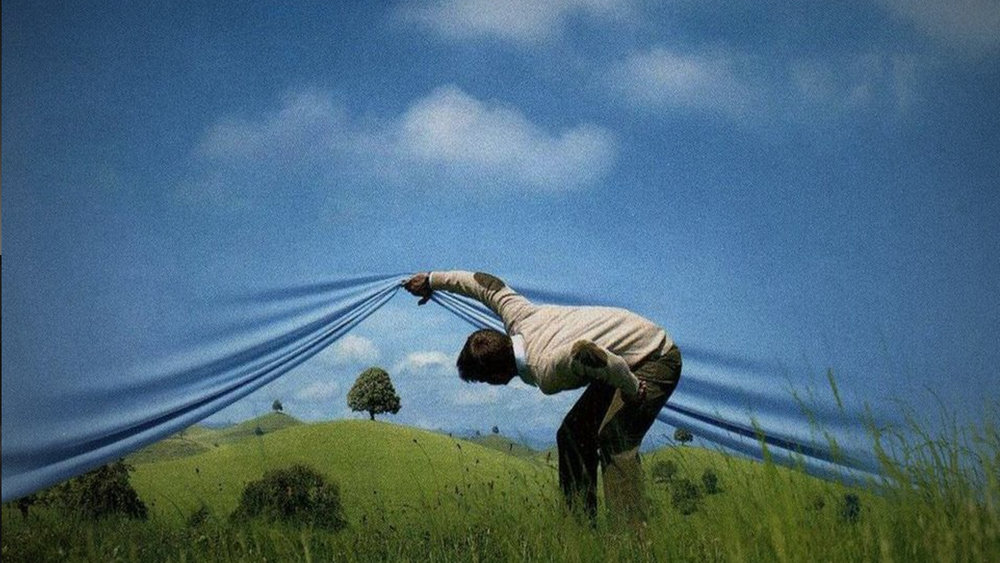

How Do We Know What Is Real?

How do we know what is real?

I took a trip back to where I was raised to visit family and friends. It was a wonderful trip but quick and too short, but that is sometimes life. It was good for my soul and even better for my mind. I loved all the conversations I had. I loved listening to how others arrived at their own points of view. Some of us still hold the same values and have adapted to life in some of the same ways. Others hold different values and have adapted to life in different ways. Why? One of the subjects that came up was reality and how many different versions of reality are out there now. As I was driving back home, a question came into my mind—how do we know what is real? —and I could not shake it. 

My standard practice when I get one of these questions is to go poking around those people I respect, read or follow and see what they think. In my latest search, I stumbled upon a reference to an article with an interesting title, so I looked it up and read it. The article was in Psychology Today, which, for me, is not one of my usual references, but the title was too inviting. The article, “How Do We Know What Is Real?” By Ralph Lewis, M.D., was well worth my time and maybe worth yours too. Before I get into the article, let me set some foundational timbers for this post.   

First, let’s be clear; we experience the world through our five senses; that is given. Second, it is best to experience the world with all five of our senses. Most agree on that point as well. It is the way most of us live and we give it little thought. We just do it. Point three: Most theorists would call this experience subjective and question its reliability, but Lewis points out that “subjective perception” is still a crucial source of data for almost everyone. We rely on it every day as we live our lives. Consider science, even its practices and methods incorporate senses, i.e., observation, which is technically considered subjective and yet still a foundationally part of the scientific method. Dr. Lewis writes, “Science is just a method to minimize the distorting effects of our perceptions and intuitions and to approximate a more objective view of reality.” This is intuition and it is and should be greatly valued. You use it and so do I. It is the primary focus of this post. Most professionals use it. They depend on their own “trained” intuition to do their job. Doctors, financial advisors, plumbers, teachers, engineers and many others, all use trained intuition to excel in their vocations. 

But here is the issue I want to focus on; trained intuition is not universal absolute truth nor is it reality. It is a form of discernment that allows us to problem solve. It is assumption and inference developed through our education and training that works with who we are to solve issues. It is also based on our ideology which is a composite of our beliefs and values. This makes it uniquely ours, and it tends to work only for us. But this means that we often see our intuition and as reality. In some respects, it is, but it is not ultimate reality for us. The more success we experience the more egocentric we become, and this puts us in a position to think our reality is everyone’s reality. It never is. Your doctor may have an intuition about why you are sick, but that is the result of his or her interaction with you and your issue. At best, it is a temporary situational reality that works for your current situation, but that is as far as it can go. As Lewis states, “But it [intuition] can be completely off base” and lead even experts astray.” Lewis continues, “We have to be aware that our intuitions and firmly held assumptions may be completely wrong.” This leads me to a question. Where does intuition lie? The answer is the brain. 

The brain is a “well-honed but imperfect virtual reality machine,” according to Lewis. We don’t have a brain; we are a brain. Our brains produce subjective perceptions which are representations of our external world—our very own form of virtual reality. According to Lewis, we can be confident that most of the time these subjective perceptions that our brains produce are faithful representations of our actual external world. Social cues are just one example of our brains making a subjective perception. In most instances, we are right, but I think we have all experienced a time or two when we were wrong. 

Our brains, according to Lewis, rely on patterns, approximations, assumptions and best guesses. Our brains often take shortcuts, fill gaps and make predictions and all of these things are based upon our intuition which flows from those subjective perceptions. Lewis is clear; subjective perceptions are real, but they are not what they seem, even to those of us who own them. The brain is a “confederation of independent modules,” all working together. Lewis writes regarding this, “The vastly complex unconscious neuronal determinants that give rise to our choices and actions are unknowable to us.” 

The brain just works, and it works well due to the subjectivity of our experiences, but, as real as they seem, they are not reality for us, and they cannot be reality for us. The more successful we are the more our tendency will be to think that our reality is everyone else’s reality, which, again, is when we get in trouble. When we push our intuition as if it is reality, then we will think it is reality. When this happens, we merge our intuition with our existing ideology, and they become one. We will always find others who share and reinforce our ideology, then it is our ideology that becomes our reality. This tends to isolate us inside our ideology which becomes our ultimate reality. This is the Land of Oz and not reality at all. This is where real issues arise in the form of narcissism and nihilism.

Lewis goes into mystical experiences and hallucinatory or dissociative experiences to make his point. He posits that these experiences seem so real to those who have them that they believe that they have discovered a transcendental reality. They have not discovered an alternative reality. They have merely experienced the power of a chemical or drug or the power of suggestion. The brain thrives because of subjectivity, but that subjectivity makes it vulnerable to external influences like drugs and persuasion. We would be naive to assume that our subjective perception of the world was anything but that, and yet this is where many are today. There is no longer a concern about doing the right thing, working hard, having integrity, honor or even telling the truth. The only concern right now is for self … to be right. We are in a war of opinions, and everyone is armed with their own editorial comments. The battles wage because the winners get to declare what is true, until the next battle comes, and then, the cycle starts all over again. This is our world today and determining what is real is no longer determining what is true. Our elections have revealed that, have they not? How do we know what is real? I think the better question might be, do we care about what is real? Until we do, we will never determine what is real.

Do We Still Have Common Sense?

Common Sense sign card

The other day, in the middle of a conversation, the idea of common sense was presented as something all but gone in our culture. The subject came and went too quickly. It was only after, upon reflection of the conversation, that it came to my mind, and I couldn’t dismiss it. It stayed with me, prompting me to do a little digging as to its origins and to its current reality.

Let’s establish, first, that common sense is not a liberal or a conservative mindset. It is not a particular worldview or political position. I think many of us look at the absence of common sense as positional; to have it one must hold a certain position, usually a position that aligns with our position. That is not common sense.  

The origin of the phrase is found with a school of philosophy, which is said to hold the notion that we should begin our thinking with the fixed beliefs of mankind and move on from there. This phrase or notion, whatever you want to call it, was first penned by Aristotle who believed that all living beings have nourishing souls, but it was only human beings who possessed a rational soul. He believed it was only this rational soul that perceived. Aristotle proposed that every act of perception involved a modification of one of the five senses that then interacted with one’s entire being, when engaged with one of the fixed beliefs associated with all human beings.

Aristotle saw one’s perception as provinces of sensation and believed that human beings perceive by means of difference between the polar extremes contained within each sense. For example, he saw these provinces of sensation as a “kind of mean” between two extremes as in the difference between soft and loud in sound or bitter and sweet in taste. His inference was that human beings perceive by means of difference, but he believed that one sense cannot perceive itself. According to a host of theorists, Aristotle speculated that there must be an additional sense or a “common sense” that coordinated the other senses. He suggested that this “common sense” instituted a perception that is common to all the other senses yet one condensable to none of them. 

Most theorists agree that this common sense, referenced by Aristotle, was not a sixth sense or an additional sense; instead, it was more a sense of difference or a unity of the senses that manifests together when considering something of significance, a fixed belief, if you will, engaging all five senses, which in turn act collectively on one’s being. 

Mention common sense today and most default to the ideas of practical judgement and social awareness as both relate to an individual being living in a world with all beings, but there is a deeper implication … the one with which we started. Do most still have common sense? Or is there still a need for common sense? Both questions have implications socially and culturally. 

First, are there any commonly accepted fixed beliefs to which almost everyone, even in their differences, agree or acknowledge? It is thought that agreement or acknowledgement of these fixed beliefs manifest common sense but if there are a dwindling number of fixed beliefs … what happens to common sense? I am proposing that culturally there is indeed a diminishing number of commonly accepted fixed beliefs but that is due to all individual beliefs being given positions of acceptability. The question not yet answered is this one: does the acceptance of all individual beliefs still produce common sense in the same way a communal acceptance of a fixed belief did in the past?  

When was the last time you heard common sense referenced? I can’t say that I have heard the phrase in quite some time. As I look out at our world, I see an absence of common sense but does anyone else? Common sense seems, to me, to be an individual trait produced by communal membership. Does the absence of common sense signal an absence of community or an absence of something else? I am thinking of submission or empathy, two areas I see less of these days. 

The idea of common sense was the sense that kept you “in the middle of the road,” if you will, kept you connected with all others with your differences intact. It was this “common” amid all your differences that you shared with your fellow men and women in ways of connect-ability. It connected you with others and allowed you to keep your differences while connecting with others who were themselves different. It was “common sense” that tolerated individual differences for the sake of the collective whole. Over time, some individual differences became acceptable to our collective common sense, but what happens when all differences are given equal status of acceptability? Well, first, we lose the need for common sense, and second, I am not entirely sure, but my sense is that we lose something important … something communal … something distinctly human.    

I would love to hear your thoughts? Hit the comment section with them because thinking matters!