
The Disappearance of Deference: Thought and Perception

Part II: Thought and Perception    

As I begin this section, it is important that we not leave this idea of akrasia behind. Aristotle saw akrasia as a failure (actually, a state of failure) to accept the circumstances associated with the context of an individual action, which, in certain situations could be considered delusional. This akrasia was powerful and could and would become presuppositional, due to its nature, if employed consistently. According to Aristotle, the state of failure found in akrasia is produced by the strained relationship between thought and perception. When one’s perception reaches the point of reality and impacts thoughts and actions, it’s nature will become presuppositional for the individual. It will become their reality and impact who they are and how they live.  

The Thomas Theorem applies here, which states, “if men define situations as real, they are real in their consequences.” This theory refers to the point when an individual’s subjective perception of a situation trumps the objective facts of the situation and shapes and impacts behavior, affecting the resulting actions of the individual’s behavior. The application of the Thomas Theorem indicates the presence of the following assumed truths as lived out by the individual:

  1. It is assumed that human behavior is guided only by one’s own perception and interpretation and not impacted by objective truth. 
  2. It is assumed that it is the individual who defines what is taking place, even when involving others, by way of their own perceptions and interpretations which are the basis for one’s subsequent actions. 
  3. It is assumed that even if one’s actions are based upon one’s own false perceptions, there are real world consequences to these actions due to the person acting on them amid others. 

There is a point where delusion begins, and the Thomas Theorem presents the elements needed for that point. I believe the ability to accept the actual consequences of a situation over one’s perceptions of that situation is reality, but it is a reality that does not necessarily emanate from within us even if the impact is predominately on us. Reality is, in most cases, based upon our thoughts aligning with most others in the situation. The deeper we retreat into ourselves the more the potential for our delusion to become our reality, which is what I see in our world today through our use of phones, social media, and technology. 

This Thomas Theorem presents one scenario on how impactful diverse versions of truth can be on us, especially when our own beliefs and subsequent actions are responses to those versions of truth. There are many terms for these situations: one of the most common would be referenced as self-fulfilling prophecies. How are we to respond to this existential threat to who we are as people. In the past, we have not had to respond as we have lived and socialized inside, what I call, communities of difference. These tended to keep our delusional tendencies in check, as we all have them, but those communities are diminishing in number. Instead, what is growing in number and in impact are communities of sameness, which promote one predominant ideology as true and right over all others. It is these communities that clamor for power; the more powerful they become, the more they will impact the moral structure of who we are as human beings. 

In the past, we co-existed amid our differences, in part, due to the mutual respect of our differences which were developed in these communities of difference. To be clear, there were problems in these communities as well, but from my perspective, there were also readily available solutions too. This is why I believe the absence of deference is important. To solve anything involves change, whether that change is an original thought or a perception, it will require both difference and conviction. Both of those come from a community of difference and not from an individual in moral isolation. Living inside one’s own isolated morality tends to produce a person who is suspicious of difference, void of respect and in possession of little consideration for others; all of these just happen to be the moral foundation of deference.

The problem we face today is that morality is presented as reason and as a priori, which would make it pragmatic and situational. In this situation, there would be no alternate consideration for one simple reason: there would be no source for it. This would be, in part, due to the isolation of the individual from difference. If every person lives inside their own homogenous morality, there can be no deference because deference depends on difference and the respect of that difference. An absence of deference would be due, in part, to a community where akrasia and its state of failure and the assumed truths of the Thomas Theorem existed as norms, which would make reason circular and morality pragmatic and situational. To reason away from an original thought at the expense of self would require an alternate thought that was embraced as valid, reasonable, and equal. The geneses of that alternate thought would have to come from a source external to who we are in our isolated moral situation; it would have to come from a community where difference was allowed to exist. Without difference and deference to that difference, would we even consider anything external to own thoughts? I think we know the answer. 

This alternate thought to our original one would have to be respected and perceived as valid and equal. We would have to live with it and see it each day in action in community. The only way our minds would be changed would be if we were convinced that our original thought was wrong. That conviction, in my opinion, would begin, in part, with deference, which would be an openness to change. The change itself would come from the community and the different moralities found there. To be clear, a community used to be a heterogenous collective of which an individual was a member of difference. Not too long ago, communities were everyone shared the same ideology and morality were not referenced as a community or even in a positive light. There are many forms of community. Community could be one’s family, school, friend group, church, workplace, or neighborhood, but these communities of difference are dying due to the consolidation of communities into one morally homogenous community group with one moral ideology. Many of these communities have a home that is often online, making it much easier to expand but also much easier to educate the community in the isolated morality.

Considering all this, what does reason look like today? That is the next question I will tackle in my next post. Until then … 
How Do We Know What Is Real?

How do we know what is real?

I took a trip back to where I was raised to visit family and friends. It was a wonderful trip but quick and too short, but that is sometimes life. It was good for my soul and even better for my mind. I loved all the conversations I had. I loved listening to how others arrived at their own points of view. Some of us still hold the same values and have adapted to life in some of the same ways. Others hold different values and have adapted to life in different ways. Why? One of the subjects that came up was reality and how many different versions of reality are out there now. As I was driving back home, a question came into my mind—how do we know what is real? —and I could not shake it. 

My standard practice when I get one of these questions is to go poking around those people I respect, read or follow and see what they think. In my latest search, I stumbled upon a reference to an article with an interesting title, so I looked it up and read it. The article was in Psychology Today, which, for me, is not one of my usual references, but the title was too inviting. The article, “How Do We Know What Is Real?” By Ralph Lewis, M.D., was well worth my time and maybe worth yours too. Before I get into the article, let me set some foundational timbers for this post.   

First, let’s be clear; we experience the world through our five senses; that is given. Second, it is best to experience the world with all five of our senses. Most agree on that point as well. It is the way most of us live and we give it little thought. We just do it. Point three: Most theorists would call this experience subjective and question its reliability, but Lewis points out that “subjective perception” is still a crucial source of data for almost everyone. We rely on it every day as we live our lives. Consider science, even its practices and methods incorporate senses, i.e., observation, which is technically considered subjective and yet still a foundationally part of the scientific method. Dr. Lewis writes, “Science is just a method to minimize the distorting effects of our perceptions and intuitions and to approximate a more objective view of reality.” This is intuition and it is and should be greatly valued. You use it and so do I. It is the primary focus of this post. Most professionals use it. They depend on their own “trained” intuition to do their job. Doctors, financial advisors, plumbers, teachers, engineers and many others, all use trained intuition to excel in their vocations. 

But here is the issue I want to focus on; trained intuition is not universal absolute truth nor is it reality. It is a form of discernment that allows us to problem solve. It is assumption and inference developed through our education and training that works with who we are to solve issues. It is also based on our ideology which is a composite of our beliefs and values. This makes it uniquely ours, and it tends to work only for us. But this means that we often see our intuition and as reality. In some respects, it is, but it is not ultimate reality for us. The more success we experience the more egocentric we become, and this puts us in a position to think our reality is everyone’s reality. It never is. Your doctor may have an intuition about why you are sick, but that is the result of his or her interaction with you and your issue. At best, it is a temporary situational reality that works for your current situation, but that is as far as it can go. As Lewis states, “But it [intuition] can be completely off base” and lead even experts astray.” Lewis continues, “We have to be aware that our intuitions and firmly held assumptions may be completely wrong.” This leads me to a question. Where does intuition lie? The answer is the brain. 

The brain is a “well-honed but imperfect virtual reality machine,” according to Lewis. We don’t have a brain; we are a brain. Our brains produce subjective perceptions which are representations of our external world—our very own form of virtual reality. According to Lewis, we can be confident that most of the time these subjective perceptions that our brains produce are faithful representations of our actual external world. Social cues are just one example of our brains making a subjective perception. In most instances, we are right, but I think we have all experienced a time or two when we were wrong. 

Our brains, according to Lewis, rely on patterns, approximations, assumptions and best guesses. Our brains often take shortcuts, fill gaps and make predictions and all of these things are based upon our intuition which flows from those subjective perceptions. Lewis is clear; subjective perceptions are real, but they are not what they seem, even to those of us who own them. The brain is a “confederation of independent modules,” all working together. Lewis writes regarding this, “The vastly complex unconscious neuronal determinants that give rise to our choices and actions are unknowable to us.” 

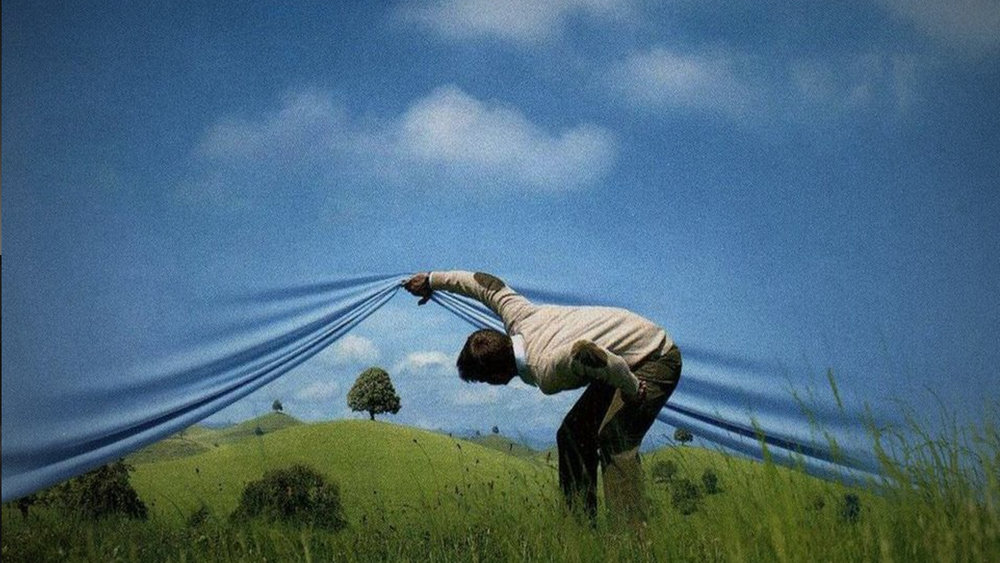
The brain just works, and it works well due to the subjectivity of our experiences, but, as real as they seem, they are not reality for us, and they cannot be reality for us. The more successful we are the more our tendency will be to think that our reality is everyone else’s reality, which, again, is when we get in trouble. When we push our intuition as if it is reality, then we will think it is reality. When this happens, we merge our intuition with our existing ideology, and they become one. We will always find others who share and reinforce our ideology, then it is our ideology that becomes our reality. This tends to isolate us inside our ideology which becomes our ultimate reality. This is the Land of Oz and not reality at all. This is where real issues arise in the form of narcissism and nihilism.

Lewis goes into mystical experiences and hallucinatory or dissociative experiences to make his point. He posits that these experiences seem so real to those who have them that they believe that they have discovered a transcendental reality. They have not discovered an alternative reality. They have merely experienced the power of a chemical or drug or the power of suggestion. The brain thrives because of subjectivity, but that subjectivity makes it vulnerable to external influences like drugs and persuasion. We would be naive to assume that our subjective perception of the world was anything but that, and yet this is where many are today. There is no longer a concern about doing the right thing, working hard, having integrity, honor or even telling the truth. The only concern right now is for self … to be right. We are in a war of opinions, and everyone is armed with their own editorial comments. The battles wage because the winners get to declare what is true, until the next battle comes, and then, the cycle starts all over again. This is our world today and determining what is real is no longer determining what is true. Our elections have revealed that, have they not? How do we know what is real? I think the better question might be, do we care about what is real? Until we do, we will never determine what is real.