
Part V: Death
In my last post, I posited the idea that in the West we stopped pursuing morality in the name of freedom but that is only half the story. We stopped pursuing morality to fully embrace freedom as our new morality. This new morality functioned as the pursuit of whatever we wanted, making freedom something it was never intended to be. It became you and me at the expense of “we.” Freedom will stop being freedom when morality is removed, and when it becomes about you and me it is already gone. We, as human beings, will never stop pursuing. In most cases, we will pursue our own needs and desires, which sounds nice and sounds safe but, it eventually leads to darker places like narcissism and nihilism.
Today, we are told that we are free, and it is Critical Theory that has freed us. It has unshackled us from the chains that have bound us, but were they really binding us? What if those chains were not binding but restraining? What if they were restraining us from becoming evil, from our own demise and from excess? It is excess that the West has given to us as freedom. Let’s be clear: excess is not freedom, and it never will be, and yet, it defines us. It is our desire; it is our dream. Does having more make us free; does it make us happier? I do know that having more makes us want more, and that is not freedom. That is addiction; that is bondage. When we get more, we want more; it never seems to be enough. That sounds oddly familiar, like something else entirely … something at odds with freedom. What happens when I want something that you want? Is that freedom or are we back to a “survival of the fittest” mentality? Maybe, we never left?
Marxism in the West has taken on many forms and addressed many issues, but it has accomplished its greatest task. It has made the West a land of individualism. We are promised everything, and we have been conditioned to believe that we can have everything. It is this promise that has become our idol, worshipped by everyone at the expense of everyone. Remember Spengler’s critique of civilization, excess was not a point of celebration but a point of concern. It was a warning bell and a flashing red light. In the West, we no longer hear the warning bells or see the flashing red lights? Why? Excess is who we are. This wanting more … it is always there, pushing us to think about ourselves, and every time we do, it is at the expense of someone else. We no longer see others. We only see ourselves. This is what excess does … others become obstacles preventing us from getting more.
Excess has seeped into our being. It now defines our excellence and is our passion. More is better, easier and what we want most. Best is a distant memory. Excess produces no loyalty, no common sense and no honor; there is only individualism and the striving for more. When we stop and look in the mirror, we see something unfamiliar, something we no longer recognize. We have been living in this land of excess for too long. Excess has become who we are. We think it is good for us, but it is a sickness that is slowly killing us. We are no longer ashamed our actions; we no longer take responsibility for anything. We stopped seeking humility long ago. Our only concern is to get as much as we can for as long as we can.
This is the West. Excess has replaced our desire for excellence and our concern about goodness with itself; all we want and care about is more. Sound familiar? This is you and me. This is survival of the fittest, chaos theory and AI all rolled up into one. This is what death looks like at the cellular level right before oncosis. Our concern is for ourselves at the expense of everyone else, and it is not moral, not ethical and certainly not civil. It is gluttony; it is embracing profligacy as if it is the air we breathe and the water we drink. Excess has become life to us. We have been told that we can have it all and we have believed that we could, never giving a second thought to what getting it all would do to us or do to others. Just look out your window and watch the world for a moment. What do you see? Bigger, better, more … everywhere. No one is immune. Excess is us and it is everywhere.
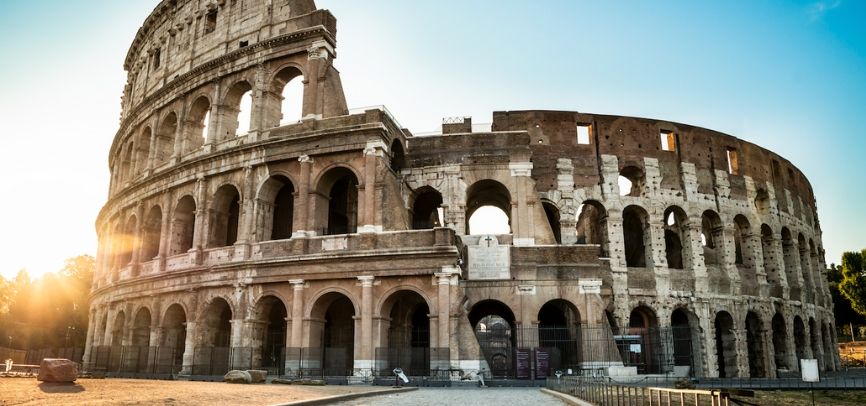
It is 2025; there are few if any traces remaining of the West and its past. The Athens of old is gone and so is Rome, but there is America. It is the land of opportunity, the shining star of the West. It represents all that we could ever want. Is it the West or something else? One author put it this way: “Call American civilization brutish, materialist, or racist (it has been called all of those things), but don’t call it Western. Western civilization declined and fell a century ago, and it’s not coming back.” In other words, the West (America) is not sick; it is not in decline. It is not being rescued or revitalized. It is dead.
The West is dead. We have been living in its decay and rot for some time now. And, to make matters worse, we killed it. That’s right and its death was due to our individualized gourmandizing. It was our wanting more … our never being content with what we have. We embraced excess without considering the consequences and, there are always consequences. We did not think it would matter, but we should have known better. We should have known that having it all was not possible; that everyone can’t be excellent, happy and wealthy all at the same time. Individual fulfillment does not produce collective excellence, community or even a future and it never will. I thought we learned this lesson over 200 years ago. Have we forgotten them already?
It is the end of the story for the West. There is no looking back nor is there wishful thinking. Death is final. There are no second chances and no rescues. Death is death. There is now only looking forward towards a new beginning. This is the way of civilizations; instead of mourning death and avoiding it, we should embrace it because the end of one thing is always the beginning of something new. The death of the West means something new is coming, or it might already be here. It might not be what you want or what I want, but it will not be what we have known. It will be different. We have a choice. We can sit and wait, or we can be part of its development. The choice is yours; the choice is mine. Let’s hope that we make a better choice this time. Let’s hope we are together and not apart, and that we have not forgotten the hard lessons of the past as we move into new beginnings. We will need to remember them, or we will be doomed to repeat them.
This concludes this series. I hope you enjoyed it. Until next time …


 Bridge Roe: Where Thinking Matters