Many consider the “West” a nebulous term with no meaning and no history and yet most consider it in decline. As I have referenced, when Oswald Spengler published his epic, The Decline of the West, he posited that the West “wasn’t just in decline; it was being dragged under.” His thesis was that all “cultures” go through a process of birth, blossoming, fruit production and withering to the point of death. The withering phase he called “civilization” because he associated it with a process within the withering phase of excess, debilitation, loss of identity and finally, death. Spengler first published his masterpiece in 1918, and at that time, he saw the West in the withering stage. As he pointed out, the beginning of the withering stage is excess. When civilizations reach the point of excess they become fat; that is not a point of celebration but one of warning. Spengler saw the West at this stage, which forces us to consider a question we would rather not: where is the West now?
Let’s be clear: the West is not a country, nor does it have geographical boundaries, but it does have a birth, and because it has a birth, it will ultimately have a death. Its birth, according to Spengler, occurred with the fusion of German nobility and the Western Roman Empire, as Spengler saw his native Germany as part of the West. Others point to the marriage of Athens and Jerusalem, but all are references to the merging of the two known worlds at the time into something new and different. Spengler thought the West “blossomed” in the Italian Renaissance, bloomed in the Baroque period and produced its greatest fruit in the 19th century. Gregg posited that the Enlightenment was one example of its fruit, but fruit is only good for a time; eventually it rots.
The Enlightenment, most would say, was not united with Christianity but instead at odds with it. Gregg rejects that idea and any idea that the Enlightenment advanced individual reason at the expense of personal faith. He acknowledges the rise of and focus on reason, but he also points to examples of reason and faith coming together for good during the Enlightenment. He presents one important Enlightenment figure in support of his supposition: Sir Isaac Newton. It was thought that Newton wrote his Principia Mathematica in response to the “materialist assumptions” of Rene Descartes and his views on planetary movements. Newton believed that the entire cosmos, including planetary movement, were governed by a Holy God and his divine providence. It was his faith that drove him to study the world and understand it. Many Enlightenment thinkers considered religion as superstition, but others, like Newton, did not.
As far as products of the Enlightenment, the founding of America is often referenced as one of its greatest. While there is evidence to support this assertion, there is also evidence, i.e., its foundational documents, that tell another story; one where its founders grounded virtue and human morality in reason bathed in a belief of divine goodness. Those Enlightenment ideas that were at odds with the Christian faith coincide with the rise of reductionism and the scientific method as both were coming of age at this time. It was reductionism and modern science that attacked faith, presenting it as incompatible with reason, for the purpose of crowning reason as the only king.
According to Gregg, there were two claims that severed the reason of Enlightenment with the Christian faith; the first was the belief that there was no fixed human nature, which clashed directly with the Christian belief of a sinful human nature. The second claim—that the only true knowledge was scientific knowledge from the scientific method—contradicted the Christian belief that all knowledge belonged to a Holy God. Gregg argues that both claims isolate science away from faith and subvert all belief in God. Science and faith were presented as mutually exclusive with science celebrated and faith mocked, but, quite unintentionally, the position science claimed and occupied alone would eventually subvert science and reason. We only need to look at current culture and the presence of Critical Theory as proof. It cares nothing for science or reason; it only cares for itself. There is no logic or scientific methodology; it alone is king and ruler. I would like to posit one notion to consider from this point forward: As the Enlightenment was attacking the Christian faith, it was also attacking itself; it just did not know it.
The ideas and principles it deployed eventually came full circle and were deployed against it. Reason, the scientific method and humanism, all used by the Enlightenment to directly benefit itself, were critiqued, undermined and turned against it by other movements like Romanticism, Idealism, Rationalism and Postmodernism. They revealed that the limitations and exclusions the Enlightenment sought to eliminate from the world were alive and well inside its own ideas, in part, due to its own nature. It is this nature that was, in my opinion, adopted, manipulated and used by Critical Theory to assert itself in the West as the new authority. It is Critical Theory that now pushes the West to the brink of decline and death.
Stay tuned for the last post in this series as I discuss where the West is now. Until then, remember thinking matters!
I recently read an article about the decline and fall of the West, which produced a single thought in my mind in response to this article … Are we living through what many are calling the decline of the West or has the West already fallen? These two questions produced more thoughts and prompted me to do a little reading on the subject. In several articles I read one book was referenced more than all others, The Study of History by Toynbee. It turns out that this is not just any book but, by most accounts, a masterpiece when it comes to Western Civilization. Let me explain why.
Arnold Toynbee suggested in his book that the West was already in sharp decline. Why did he do this? The Study of History is a multi-volume study of civilization, in which Toynbee studied twenty-one different civilizations across the span of human existence and concluded that nineteen of those twenty-one collapsed when they reached the current moral state of the United States, but here was the shocking part for me: He first published The Study of History in 1931, and in 1931 he posited that the West was in sharp decline and was, according to him, “rotting from within.” Toynbee died in 1975, but I wonder what he would think of our culture today. Are we living in a culture rotting from within or is it already dead?
With this post, I begin a series on the West with the goal of answer the question, is the West in decline or has it already fallen? There are several other excellent books devoted to this topic. Oswald Spengler wrote The Decline of the West, Christopher Dawson wrote Religion and the Rise of Western Culture and Tom Holland wrote Dominion and each author grappled with the same concept regarding the decline of Western Culture. Is Western Culture dead or is it in decline? Let’s find out together. First, let’s explore how the West came to be.
I begin with Samuel Gregg and his book, Reason, Faith and the Struggle for Western Civilization, which is also excellent when it comes to our topic. In his book, he offers his account of the West, which is like the others but also nuanced with some differences. Gregg argues that Western Civilization was conceived in a marriage of Jerusalem and Athens. His answer is like many others and yet he posits that Western Civilization was born through a marriage of “faith and philosophy” in a version of Christianity born in the West that embraced and applied both faith and reason as one. He sees this “one” coming out of ancient Judaism, which he suggests was a synthesis of both faith and reason as applied in the living of life in a new way. Life was no longer about survival, at least not in the West; there were advancements that made life better and allowed progressions in thought and religion. Gregg states that Judaism “de-divinized nature” and was the first worldview/religion to completely reject the ancient idea that kings and rulers were divine and everyone else was to be under them. Judaism, unlike all other religions around it, offered the world a new king. Its rejection of the old idea was through a new view of the cosmos that was spiritually oriented. Judaism saw the cosmos as part of the created order of a universe created by a Holy God and because the universe was created by this Holy God it had order and intelligence and was not formless chaos as all others saw it.
There was good, in time and space, and hope and all was not lost, according to Judaism, which was a much different narrative of the world than most other historical and religious narratives of the time. What Gregg was proposing was that in Judaism the Jews found a liberation of sorts of the cognitive from time and space. Judaism affirmed that there was a good God in heaven who was a Holy Creator God and that human beings were part of his created order, and not merely interchangeable parts of a larger machine. Human beings were seen as created in the image of this Creator God; they had purpose and were given responsibilities to live as moral beings in this created order. This was a radically different idea than all other ideas before it and what first makes Western Civilization unique. This was a vastly different worldview and would be distinctly western and a foundational mark of Western Civilization.
The merging of Athens and Jerusalem cannot be underestimated as to its impact on Western Civilization and the Western mind, especially regarding our own current modern Western mindset in the United States. It is the United States that has been the pseudo-capital of Western Civilization for many years now, and it has been the United States that has served as the poster child of the West. The United States has impacted the West, including the Western mindset, more than most. And, now it is this mindset that has become compromised as referenced in part by Alan Bloom in his book, The Closing of the American Mind. It is the American mindset that was so free and so creative that now seems to be more vulnerable and more impacted than all others by the attacks against it. Bloom, in his book, attacks the moral relativism that he claimed was now in control of the colleges and universities. The very freedom brought to us by the West was the very thing being transformed before our eyes. Again, Bloom published his book in 1987, but he appeared to be saying some of the same things. The West, often seen through its colleges and universities, was in decline and dying back in 1987 according to Bloom.
Back to Gregg, he references that Athens brought both contributions and obstacles to human thinking. It was Athens that was known for its skepticism, its irrationalities and its philosophies; most of them stood in stark contrast to the distinct and different worldview of Jerusalem (Judaism). So, how did they merge when all indications are that they should have clashed? The merging of Judaism and Greek thought, according to Gregg, predates Christianity, which is marked by the birth, death and resurrection of Jesus Christ. There can be no denying the impact of Jesus Christ on the world regardless of your belief about him. Prior to Jesus Christ, educated Jews were more than familiar with Greek thought and moved easily back and forth between Hellenistic and Jewish thinking. This was due to purely pragmatic reasons as the Romans controlled the world and therefore controlled thinking. The Romans were borrowers and refiners. They invented little of their own, but they borrowed from those they conquered and bettered what they borrowed. The Romans allowed those they conquered to keep certain elements of their own culture if they accepted the elements of the Roman culture considered important. It was the Jews who were different than all other cultures; it was the Jews who had this One God who refused to bow down to any other god. Both the Romans and the Greeks viewed the Jews as barbarians. Why? Ironically, it had little to do with their religion and more to do with their thinking and their disposition. The simple answer was that they were not Roman or Greek; the better answer would be to say that they were not Western prior to Christianity. So, there it is … a connection between Christianity and Western Civilization. In my next post, I will explore this connection, but until then …
We have now come full circle to the point where the theory is to be normalized. As Horkheimer and others developed this theory, the initial intentions, I believe, were rooted in standardizing it in ways that positioned it to become “normalized” in culture. To do this positivism and interaction with it had to be addressed; it was, for all intents and purposes, foundational to almost everything … science, philosophy and even worldview. Horkheimer, in his essay, intentionally presented Critical Theory as if it had positivist intentions; he wrote, “In so far as this traditional conception of theory shows a tendency, it is towards a purely mathematical system of symbols. As elements of the theory, as components of the propositions and conclusions, there are ever fewer names of experimental objects and ever more numerous mathematical symbols.” While it appeared in this statement that Horkheimer embraced positivism, we learn later in his essay that he did not embrace positivism as it was, but as it needed to be for Critical Theory to assume its dominant position in culture. He saw the positivism that he encountered in much the same light as capitalism, as that which was “dominated by industrial production techniques,” or by the bourgeois, and as that which needed change.
To combat the positivist dominance he encountered, Horkheimer, as I highlighted in an earlier post, destabilized traditional theory, which was foundational to positivism, allowing Critical Theory the needed space to surpass positivism. To do this, he believed that Critical Theory must be capable of doing two things: it must push traditional theory to view culture within a historical context, which I discussed at length earlier on why this was important, and its critique must incorporate all the social sciences. Horkheimer explained that a theory can only be considered “a true critical theory if it is explanatory, practical and normative,” but to do this required the presence of all social sciences in its foundation and its practice. His theory must explain social issues through practical means in responses that stay inside the parameters of the field addressed, much like traditional theory, but it also must speak to and address all of culture to change it. This was “critical” theory and Horkheimer and others created it to be much different than traditional theory.
By offering a “critical” theory rooted in all social sciences that addressed a field while speaking to and addressing all of culture, Horkheimer presented a better and more improved theoretical option, but for whom? His “critical” theory was constructed to present Marxism as the norm and position it to assume the dominant positions of culture. Through his “critical” theory, he deconstructed “traditional” theory and its production for one reason; his perception was that traditional theory failed to address power and the status quo through the social sciences. Horkheimer presented Critical Theory as a theory that not only addressed power and the status quo but would use the former to deconstruct and the latter to fundamentally change the foundation of traditional theory, creating the means for Critical Theory to engage and transform culture.
Traditional theory has long been confined to the field it served, and it worked best inside the parameters of that specific field because its goals were confirming true propositions within specific fields. Critical Theory, while technically not part of science, was built to interact aggressively with all fields, including science, for greater purposes. Its interests extended beyond specific fields and into culture itself, positioning itself as dominant over all fields for the purpose of changing culture and the norms of it. Critical Theory was to interact with all of culture through power structures where it assumed the dominant position. Its goals were not confined to one experiment or one field; instead, they were much larger and more broad, purposeful and directed at cultural transformation.
Traditional theory had always focused on coherency and on the distinction between theory and praxis within intimate settings. It followed the Cogito in its view of knowledge, embracing the idea that knowledge was grounded in self-evident propositions, which Horkheimer used to introduce the idea of individual genius into the concept of traditional theory. Traditional theory typically explained facts through the application of universal truths or laws by subsumption that either confirmed or denied the truth proposition proposed. Horkheimer, as I discussed, posited that the “universal” part of the theoretical equation was rooted in the individual and not in the process, which rooted traditional theory in time and space, leaving it exposed. To confirm truth, traditional theory willingly partnered with positivism, rooting itself in an objective process, which had historically been considered the better option of confirming scientific investigative truth. Traditional theory would defend a scientific truth through empirical confirmation which embraced the idea of an objective world where knowledge was confirmed through empirical means, thought to be a mirror of reality. This view was not only rejected by Critical Theory but overrun and changed by it.
Horkheimer and, for the most part, all the Frankfurt School, rejected the notion of the objectivity of knowledge due to its historical and social foundation, which, ironically, came courtesy of Horkheimer’s hand and was used later to normalize Critical Theory. Horkheimer wrote, “The facts which our senses present to us are socially performed in two ways: through the historical character of the object perceived and through the historical character of the perceiving organ.” In other words, Horkheimer, with this statement, was confirming that it was the individual genius of the observer that made traditional theory work, which positioned it in time and space, allowing it to be overrun by the “better” and more dominant Critical Theory. Traditional theory, with its roots in an objective view of knowledge, was now susceptible to Critical Theory because of its objectivity, which was now grounded in the time and space of the individual and not in the dialectic process of theory. This made traditional theory historical, which exposed its past dominance, making it as vulnerable to the criticisms of Marxism as everything else. Critical Theory, for Horkheimer, was that which would solve the issue of the “partiality” of the “culturally impacted” observer and of the past dominance of the oppressors; for Horkheimer, it was Critical Theory that would free individuals from what he saw as their entanglement in a social embedded perspective of interdependent oppression.
Traditional theory, historically, had been evaluated through practical implications with no real practical consequences of significance outside its field; knowledge, as a mirror of reality, was more a “theoretically-oriented” tool than anything else, which clarified knowledge as a product and one that was objective. Critical theory was presented as “the” theory, void of any kind of bias towards knowledge that is objective; it presented itself as that which considered knowledge through functional relationships to ideologies and societal liberties. Considering this perception, knowledge becomes what Critical Theory needs it to be … societal critique, cultural action and subjective, directly impacted by the dominant and ultimately a means to transform reality. This is where we find ourselves today, living in a reality that is being transformed before our eyes. So, how do we recognize Critical Theory as we live each day?
Six Ways to Recognize Critical Theory:
Here are six ways to recognize Critical Theory in everyday life. First, Critical Theory views language as a social activity and as a vehicle of ideology so the adage, “sticks and stone may break my bones, but words will never hurt me” is wrong to Critical Theorists. Words will hurt you and are considered harmful to advocates of Critical Theory therefore, they need to be attacked and treated as acts, and those inside Critical Theory will treat them accordingly. Words will be attacked and treated as criminal acts. Second, there will be no rules associated with anything rooted in Critical Theory for one purpose; it is Critical Theory that is the ultimate authority, and it makes all the rules. If norms are being assessed and critiqued through Critical Theory, almost anything goes. Stealing, vandalism, rioting, and fighting are all justified if they are manifestations of the oppressed who are “rightfully” pushing back against their oppressors. Who are the oppressed? Well, they are anyone who has not been in a position of power in the past regardless of their personal efforts. Third, those critiquing and assessing generally have authority even if they have no experience in the area that they are critiquing and assessing. Their authority comes from believing and rooting themselves in Critical Theory, which is ultimately “the” authority over all fields and all theories. For example, a political philosopher critiquing a medical procedure with no formal medical training will have more authority than the medical professional due to the authority of Critical Theory. We can expect to see more of this if Critical Theory continues to rule.
Continuing, fourth, there will generally be hypocrisy associated with any movement made under the authority of Critical Theory. For example, those condemning wealthy company CEOs and their high salaries who produce a product and provide viable employment to many will, with the same breath, embrace professional athletes and celebrities who are, in most cases, much wealthier than company CEOs but produce no product and contribute little to society other than entertainment. This phenomenon is a fascinating study waiting for someone to take the time to address it. Fifth, any movement in Critical Theory will trump tried and true established theories and truths in science, medicine or philosophy. It will be Critical Theory that pushes the agenda and the change in the field and not expertise or experience. We see this taking place in government, law and even medicine. And, finally, Critical Theory sees everything as embedded power structures existing in a binary world of oppressed and oppressors. Everyone is either looking to oppress or being oppressed. Everyone is either bias in some way or the victim of some sort of bias directed against them. Dominant norms that are good for society will be condemned, not on their merit or quality, but because they have existed in a dominant position for too long. Overall, we must remember that Critical Theory has as its foundation Marxism, and it will always have Marxist’s tendencies which identify it. Each of the examples I have presented have one thing in common: all of them are Marxist in nature.
This is the world in which we live, and it is a Critical Theory world … for now! One thing I know, all things eventually come to an end. The Babylonians, The Roman Empire, the Greeks … all of them came to an end at some point and so too will Critical Theory. When that day comes, and the history for this movement is written what will it say?
This concludes my series on Critical Theory. I could spend the next year on this one topic, but all things must come to an end; it is time to move on to something new. Thanks for reading and remember, thinking matters!
The Deconstruction and Development of a Theory That Is Critical
I have now arrived at the point where I will pull back the layers of development regarding Critical Theory. Theory, before Critical Theory, had, as part of its composite, elements that were analytically oriented towards analysis with a distinct dialectic tendency. With this dialectic tendency, theory was considered a well-substantiated explanation of an aspect of the natural world. It required fluidity with an analytical orientation which allowed theorists, especially those in science, to make predictions based upon it being testable under controlled conditions in experiments. In the case of philosophy, theories were evaluated through principles in abductive reasoning and pushed to withstand scrutiny; they were used to test a thesis though the development of an anti-thesis, which was thought to confirm whether the original thesis was true or false. This element of theory was, for Horkheimer, problematic as the dialectic was not only rooted in science but also a benefactor of positivist protection. It was perceived as a process that revealed true scientific tendencies through objective means (positivism). Horkheimer recognized that theory, left untouched, did not have roots or tendencies towards Marxism nor would it ever have any of those tendencies unless its foundational structure changed.
Horkheimer began the deconstruction of general theory by making a connection between theory and society, which pulled a distinctly social element into the perception of theory. He established this connection through what he called the savant or the specialist. This was an important step in the deconstruction of theory; he wrote regarding the specialist, “Particular traits in the theoretical activity of the specialist are here elevated to the rank of universal categories of instances of the world-mind, the eternal Logos.” His point was to establish that it was the individual (a member of society) that was the universal when it came to the theoretical (theory) because, according to Horkheimer, the universal was not theoretical or dialectic; it was, instead, individual genius. It was this push towards individual genius that also established theory as historical. He explained that the decisive elements of theory were nothing more than those activities of society, which are “reduced” to the theoretical through the activities of individuals in society, and in the case of theory, the activities of a specialist or of individual genius were activities of society. This tied theory to the social through the individual (either as a specialist or through individual genius), and it was the individual that rooted theory in the historical through the time and space occupied by the individual.
In his union of theory and the individual, Horkheimer created a bridge from the theoretical to the social via the individual through individual genius, but it was the specialist whose activity he labeled as “the power of creative origination.” This activity, to a Marxist, was production, which Horkheimer labeled “creative sovereignty of thought,” which reinforced that even the individual’s thoughts were social and historical. This effectively removed scientific theory from its privileged and protected positivist (objective truth) position and reduced it to a social action. This was a line in the sand for Horkheimer … a risk he was willing to take. The risk—attacking the legitimacy of all other theories grounded in the scientific through his new “critical theory—was well worth it for him. Coming out of World War II and the oppressive reign of the Nazi war machine, he believed people were open to this radical change he proposed, especially if it “appeared” to bring back the civil liberties and the freedoms they had lost.
For Critical Theory to live beyond its inception, it would need the idea of theory (the theoretical) to be re-cast as a different perception with a different semantical interpretation, one that embraced Critical Theory without requiring Critical Theory to embrace old ideas of theory, change to them or be compromised by them as applied by science. This new theory Horkheimer proposed had to exist as dominant while bringing change to the theories it encountered in ways that pushed them towards tendencies that were critical and Marxist, and the only way to do this was for it (Critical Theory) to be authoritative. When encountering all other theories it had to be “the” critical theory in each interaction. From my perspective, I do not believe this could have happened at any other point in history; after World War II and the Nazi regime’s widespread oppression, Horkheimer saw an opportunity and took it.
Horkheimer, to usher in this change, pushed the theoretical to the point of instability, which produced doubt, setting it up to be re-established as “the” critical theory to remove the doubt that was now there. Theory, for Horkheimer, was now where it needed to be; it was no longer theoretical in any protected sense but instead, it was a true means of production. Its perception was now more a social function or an individual decision than anything theoretical, which made it part of production, which he labeled as a “production of unity,” which reduced production to that of a product. Horkheimer never saw production as something that produces a product; he saw production only as a product of culture, manifesting in the same ways as other cultural products. For him, it had to be a means of production that could be controlled by Marxism. If production was no longer a process of “becoming,” then it would be open to “becoming” something new, something with Marxist tendencies, especially if it was firmly entrenched in the social and the historic. As a product that was social and historic, it would now be oriented towards individual tendencies (the savant or the specialist), opening it up to cultural changes and semantical shifts with distinctly Marxist orientations.
As a product, the process of production was now categorical, easily manipulated and positioned to be re-formed in a different light. Horkheimer’s attack comes full circle, when he wrote, “In reality, the scientific calling is only one, non-independent element in the work of historical activity of man, but in such a philosophy the former replaces the latter.” Linking theory to history allowed it to be supple in much the same way history was, which positioned theory to be pliable … more open to revisions, changes and the influence of propaganda, which would allow it to be impacted by the orientations of scholars and theorists addressing it in much the same way history was addressed. This pliability that was now attached to scientific theory was no longer fluid in any natural sense but mechanical in every aspect of its movement. Its movements were intentional, which allowed it to be manipulated through the power functions of those overseeing it. It would become dependent on individuals and their interpretations, orientations and contexts and it would no longer be dialectic. This created space for Critical Theory to move into and take over the theoretical through the individual.
As I read Horkheimer’s essay, his attack on the theoretical was on full display; he saw all dominant theories and philosophies, as well as those objects we perceive as natural—cities, towns, fields, and woods—as bearing the marks of man and shaped by man’s oppression. They were products of society to him, the means of production and in a perfect Marxist world, equally distributed to all and not left to the bourgeois to manage and control. He was clearly now viewing theory, through a distinctly Marxist lens, as social and historical. Theory was part of society and tainted in all the same ways; Horkheimer wrote regarding society, “The existence of society has either been founded directly on oppression or been the blind outcome of conflicting forces, but in any event not the result of conscious spontaneity on the part of free individuals.” This one statement about society was also to be applied to theory, prior to his deconstruction of it. He saw society as that which was built intentionally with ill intentions. He wrote regarding this thought, “As man reflectively records reality, he separates and rejoins pieces of it, and concentrates on some particulars while failing to notice others.” Those concepts of recording, separating and rejoining are conscious intentional actions impacted by the beliefs and values of those individuals determining the recorded, separated and rejoined. Horkheimer bemoaned the intentionality of society and saw its structure as intentionally created to give the bourgeois everything at the expense of everyone else, and yet he used it to deconstruct theory and recreate it as Critical Theory.
What Horkheimer initiated so many years ago has come to fruition. Horkheimer has essentially replaced theory with a “critical” theory that is analytically and distinctly Marxist. He took the theoretical, and its dialectic orientation and replaced its praxis with a Marxist one. The authoritative nature of theory, which has been assumed, especially in science, to possess an objective ability to confirm what is true, has now been taken over by a Marxist orientation with intentions oriented towards Marxist truisms. It is Marxist tendencies that are now dominant inside theory. They have been reconfigured to analyze other non-Marxist theories in critical ways … to cast doubt on them until they are overrun by this new configured “critical” theory. In the end, they either submit to it or die. This is Critical Theory; it was created to be “the” critical theory of all theories and to leave Marxism in a dominant position in science and ultimately in society. This is where we find our world today … right where Horkheimer and his colleagues had hoped it would be. It is Critical Theory that drives the ideas in our colleges, pushes the bills in our government and changes the norms in our culture and every idea, bill and norm has tendencies that are critical and distinctly Marxist. As we look at our culture and ask, how did we get here? There is but one answer … Critical Theory! Stay tuned for the next installment of this series. Until then, remember, thinking does matter!
In my last post, I suggested that Horkheimer, to create his new “theory” had to re-create the general idea of theory itself. I posited my own assertions, which, if I am honest, are based strictly on my reading of his essay and my own convictions formed from that reading, which is my attempt to stay inside the spirit of Critical Theory. I tried to limit my secondary sources and keep his essay front and center with little to no outside interference. Right or wrong, I am left with my own assertions; whether they are corroborated by others or even valid seems to me of little consequence considering what I have read so far in his essay.
In a world of Critical Theory, one of the first impressions that came to me was this one: there are no rules. I need only to assert my ideas in persuasive sincere ways and that should be enough, but that is problem. It should never be enough; It should require more because, like it or not, they are my perceptions and those will always be based on me. It is the same with Marxists, Idealists and Pragmatists; beliefs and values always turn into perceptions. The important point is not to assert your perceptions as true but to determine whether your perceptions are true. Let’s jump right into this post with my own assertion.
My initial assertion regarding Horkheimer’s work on theory begins with this thought: to make it “critical” would require it be fully “critical” from all angels and for all situations. The only way I see this being accomplished is if Critical Theory becomes the dominant theory over all other theories. Regardless of the validity of my claim, to answer that question I must examine, in detail, his attack on theory, or the theoretical (I reference it at times this way to clarify it from the categorical or the practical), because whether right or wrong, it reads as an attack to me. My perception is impacted by his statements; for example, he wrote, “The traditional idea of theory is based on scientific activity as carried on within the division of labor at a particular stage in the latter’s development.” Here Horkheimer seemed to direct his attack against theory by linking traditional theory directly to the action of the individual engaged in the theory, and in doing so, he presented the idea that the scientific action of a theory was no different than any “other activities of a society.” What I believe he was positing was that the individual action of employing a theory was, in substance and essence, no different than the individual action of a teacher, a coach or any other person acting according to their own convictions as a member of society; they are all social actions, which, in a subtle way, places science in a position to be overrun by Marxism.
I do not believe his point here was to destroy theory but, to keep it in a state of flux to be used for his purposes. I believe he meant to link current theory to the individual for the purposes of giving the individual power over the theoretical process, which ultimately was a connection to the means of production via the individual. Inside Marxism, the individual and their actions would always be considered a means of production. Regarding this, he wrote, “… the real social function of science is not made manifest; it speaks not of what theory means in human life, but only what it means in the isolated sphere in which for historical reasons it comes into existence.” In this one statement, he reinforced his reduction of science to that of a social function and presented it with Marxist tendencies: as a means of production. With no pressure to defend his assertion, he proceeded to “deconstruct” out the “positivist protection” that science enjoyed, which would always present it as true and never as a means of production.
The result of this deconstruction was a reduction of the theoretical to a position where it would meet all the requirements to be a means of production, but he also does something else that was equally important. He plants into the discussion a subtle historical reference (“historical reasons”). This historical reference completes this reduction of science, from that of a theoretical process with positivist protection (my phrase) to one that was now an action resulting from an individual choice in time and space. This is important because, as a historical reference, the reduction of science was complete, He had moved it out of the theoretical realm and placed it firmly into the social realm, where it will be at the mercy of Marxism as a means of production.
Horkheimer next took aim at society, which he viewed from a distinctly Marxist perspective. He defined society, as “the result of all the work” of all sectors of production in culture. His negative view of capitalism stemmed from his belief that it was the bourgeois in a capitalist state who would be the ones benefitting from the labor of everyone in society, which, for him, was categorically unfair and oppressive. This categorical oppressiveness, for Horkheimer, even extended to all ideas and thoughts of a society. For Horkheimer the necessity of re-establishing the conception of theory in a Marxist tradition was priority one in his development of a new “critical” theory fully capable of competing against those theories already established and dominant. For it to have a chance it needed a cultural foundation that would welcome it and allow it to grow and to have that foundation, he would have to destroy the ideas of capitalism, which operated on ideas like supply and demand and Smith’s invisible hand, which would be almost impossible to control from a Marxist position. He would borrow the radical doubt of Descartes to accomplish this task.
Horkheimer understood that every dominant theory, once doubted, would be less dominant and more vulnerable. For Critical Theory to take hold it had to be the critical lens used in analysis of all other theories and part of that critical analysis had to be doubt, which once used in analysis, by Critical Theory was left attached to the theory analyzed. Horkheimer’s goal was that one day Critical Theory would be the dominant worldview, but the current state of science, with its theoretical roots in qualitative and quantitative methodology, would destroy Critical Theory if it were not first destroyed. For Horkheimer, this was his motivation for his attack on the concept of theory. It was also why he used the radical doubt of Descartes in his critical analysis of theory to change it and then recreate it in the image of Critical Theory.
In his essay, Horkheimer dictated how theory was to be recreated semantically and culturally to reflect Marxist beliefs, and then he labeled this theory as “critical” and used it for critical analysis over all other theories. Horkheimer hoped to accomplish two tasks with his recreation of theory: he would eliminate the original idea of theory, which was a threat to Critical Theory, and recreated it in the image of Marxism. Second, he would use this recreated and reconstructed theory as vehicle to deliver Critical Theory in ways that would assert it as a worldview and as dominant. As we look out at our world, what do we see today? We see those dominant theories of the past willfully submitting to the whims and desires of Critical Theory.
It is Critical Theory that has become the lens of critical analysis, leading the charge to canceling dominant theories of the past and open the cultural door for new theories to come rushing in and these theories connect with no other theories. They make no sense when it comes to science or even medicine and yet, the take hold, are defended and are profoundly impact culture. We need only to look back and ask a few questions. When it comes to Critical Theory, where is dialectic thought? What about the antithesis? We see those theories of the past cast into the darkness of doubt by the shadow of Critical Theory, and they either align with or, in some cases, are replaced by Critical Theory or they fade away and die.
This is our world today. It is a world where Critical Theory has become more dominant than we even realize, and that is by design. My next post will explore how theory became “critical” theory, with the hope of educating all of us in ways that will help us identify Critical Theory and its impact. Until then …
When examining Critical Theory through the eyes of Max Horkheimer, we can see a bit of what makes it unique and different. Let me begin with a quote from Horkheimer; early in his essay, he wrote, “There is always on one hand, the conceptually formational knowledge and on the other hand, the facts to be subsumed under it. Such a subsumption or establishing a relation between the simple perception or verification of a fact and the conceptual structure of our knowing is called its theoretical explanation.” Here Horkheimer began to subtly push a shift in our knowing, pushing it into a realm that was almost that of ascendency where facts are now subsumed to our knowing, which is a distinctly Marxist tendency, but it was also very much an attack on current knowledge, albeit subtle. This is an important distinction to remember as we move forward.
Horkheimer unpacked the idea of theory early in his essay, starting with a statement regarding the essence of theory; he wrote, “What scientists in various fields regard as the essence of the theory thus corresponds, in fact, to the immediate tasks they set for themselves.” This one statement, in my opinion, supported his earlier assertion regarding our knowing; that it is powerful, dominant and impactful on theory. He goes on to use words like “manipulation” and “supplied” to reinforce his concept of theory over one that so many have held as the standard and the determiner of our knowing. He was asserting that it was nothing more than an intentional task of an individual, inside their own individual essence, which was the application of his new assertion. Because he believed knowing was rooted in our own ascendency, he also believed it was nothing more than an individual choice, which established the concept of theory as he needed it to be presented … as personal, individual and rooted in historical and social condition. He wrote of “the manipulation of the physical nature” in the context of the “amassing of a body of knowledge” such as was supplied in an ordered set of hypotheses to imply, again, that there was individual intentionality to the idea of a theory.
Horkheimer wrote of the influence of the subject matter on a theory and vice versa, calling the process “not only an intrascientific process but a social one as well.” It was important for him to defend his assertion of ascendency as his assertion was also an attack on the social dominant thinking of the day, which he identified earlier as theological in nature. The essay, at this point, reads as a scanning of the landscape, in some respects, of the theoretical in search of useful tools to develop and apply in ways that created and developed a distinctly Marxist ascendency at the expense of the current dominant theological one. We can identify the tools he found useful through the points of his deconstruction.
One such example was his references to the Positivists and to the Pragmatists. He brought attention to the fact that both had similar connections between the theoretical and the social, which he questioned as to whether either one was useful or even scientific. He pointed to the scientific task, and to the scientific community and to their own general call in such situations as a call that was a “sense of practical purpose” and a “belief in social value” when his assertion was that they were both nothing more than “a personal conviction”. This is a primary example of Horkheimer taking both concepts, deconstructing them to the point of doubt in their current states, with the purpose of reconstructing them later inside Critical Theory for beneficial purposes of enhancing and supporting Critical Theory.
The dominant idea of theory, to Horkheimer, was always under his attack. He took the current idea of theory found in science and employed his deconstruction/reconstruction dichotomy to develop the future one he intended to employ. He began by acknowledging that scientists in various fields regard their own tasks as the essence of theory, and the key word here was “essence,” which he already established as that which was rooted in man. This idea of essence destabilized general scientific theory, pushing it away from the theoretical and towards the practical, pragmatic and even personal; it was the personal that destabilized theory to the point of existence. Once theory is personal it is no longer theoretical but instead opinion or perception, which positions it to be developed into something completely different. This was the brilliance of Horkheimer on display in Critical Theory.
The conception of theory, for Horkheimer, was “grounded in the inner nature of knowledge” for the purpose of establishing it as historical, which, again, pushed it completely away from the theoretical, reducing it all the way down past the personal to an “ideological category.” Once it was categorical it become vulnerable to manipulation and in a state of readiness, for the purposes and intentions of the manipulator. Horkheimer wrote, “That new views in fact win out is due to concrete historical circumstances, even if the scientist himself may be determined to change his views only by immanent motives.” He goes on to note that concrete historical circumstances, while important, inside science tend to succumb to “genius and accident.” Here, again, is the brilliance of his deconstructive process on display as he casted doubt into the very essence of theory as it was currently known and employed.
As Horkheimer explained why social conditions are not considered as much as other factors, he made an interesting reference. He wrote, “The theoreticians of knowledge usually rely here on a concept of theology which only in appearance is immanent to their science.” That one statement was followed by a reference to new definitions and how they are drawn, depending on directions and goals of research. This was the process of Critical Theory and the beginning of the end of general scientific theory. It would never again be as dominant despite the efforts of many. It took many years and consistent and continuous pounding away at the foundations by generations of Critical Theorists, but here we sit in the place that Horkheimer imagined many years ago. Critical Theory has become that which is imposing its will on all other theories.
As we read Horkheimer, we are experiencing his deconstruction/reconstruction process, as it was used on the concept of theory inside science. It was this deconstruction of theory that was the crack in the door, so to speak, that opened for Critical Theory to come barging into culture. It is through Critical Theory that so many other different theories entered our culture and pushed their way into battling the norms of culture, but each would have never been granted access under the old concept of theory. The idea of the theoretical had to be destroyed for Critical Theory to take hold due to its subjective nature and its Marxist tendencies.
This concludes this post. Stay tune as I unpack more of Horkheimer’s essay with the hope that it will help us understand more about our world and the impact of Critical Theory on it. Until then …
In the next several posts, we will look at Critical Theory through Max Horkheimer’s 1937 essay “Traditional and Critical Theory,” in which he first defines Critical Theory through the contrast of it with other traditional theories. It was Horkheimer who presented the agenda for the Frankfurt School in his 1931 lecture given upon receiving the directorship of the Institute of Social Research. In that lecture, Horkheimer proposed merging philosophy and social theory with psychology, political economy and cultural analysis in ways that developed a social philosophy capable of truly interpreting social reality, which, was and still is an important concept of Marxism, but there was more. He also implied that this process of interpretation of social reality would also create opportunities to change social reality. Why was that important?
Social reality through a Marxist lens is always perceived to be bias (unless it is Marxist) and rooted in a class struggle between the working class and the bourgeoisie (or capitalists). Marx saw capitalism like he saw all societies of the past, rooted in slave labor. To him, they were the same; their class struggles were similar with one smaller group exploiting everyone else for their own benefit, which is why he advocated, as a true Marxist, for the common ownership of the means of production. He believed common ownership would eliminate the profit motive, which he saw as one of the main causes of class struggle. He advocated replacing it with a motive for human flourishing, but time has not been kind to Marxism. Common ownership of the means of production has been used, not to produce human flourishing, but, instead, to oppress and crush human flourishing through the vehicle of communism. It is in communism where we find much of the tyranny and the oppression in our world today, and it is also in communism where we find more suffering than flourishing. Critical Theory is not Marxism, at least it is not supposed to be. How is it different?
Horkheimer used social sciences as the standard for Critical Theory because he found that the social sciences modeled themselves after the natural sciences, which root themselves in empirical social research. This was important for him, but there was also the issue of a distinctly positivist orientation, which he had to address (Positivism is the idea that every assertion can be scientifically or mathematically verified which justifies the rejection of metaphysics and theism.). This positivist view of the world is still how we tend to see knowledge production today; it is true if proven by quantitative research (that which roots itself in the mathematical and the scientific), which make most of us positivist-bias, trusting only science and math as the means to truth. Truth is found by both objective and subjective means. Critical Theory not only does not embrace positivist theory, but it is slowly trying to replace it with itself, which was Horkheimer’s solution to this issues.
When we examine Critical Theory, we find that it reflects only on its own origins, which are subjective and murky at best. This is one reason why Critical Theory moves away from a positivist view of the world … Critical Theory is primarily subjective; it depends on intentionality and seeks to leave space for newly created theories and philosophies with a distinctly Critical Theory orientation. It also embraces “an interdisciplinary methodology,” as I have highlighted, that seeks to bridge the gap between research that is empirical and research that is rooted in what one author called, “the philosophical thinking needed in the correlation of history and empiricism.” That bridge between, that which is static, in the past, (history) and, that which is experienced, in the present (empirical) is one that must be traveled. For a Marxist, it is an easy journey across, but for all others, it is one full of potholes and difficulties, which is seen as opportunity by the Marxist. One theorist put it this way, “Critical theory aims not merely to describe social reality, but to generate insights into the forces of domination operating within society in a way that can inform practical action and stimulate change.” Again, we cannot forget the Marxist view of social reality and the struggle they see in it. Critical Theory seeks to determine the best ways to undermine current social reality—because they see it as oppression—to prepare it for its own Marxist reality.
One of the first and most fundamental goals of Critical Theory is to unite theory and practice, not to discover that which is true, but to form a “dynamic unity with the oppressed class.” This unity of theory and practice in Critical Theory is not a unity as much as it is takeover. Both theory and practice must submit to the subjectivity of Critical Theory in ways that transform, allowing for the formation of a dynamic unity with the oppressed class. When this transformation takes place, research, whether quantitative or qualitative, takes a hit and becomes something it was not supposed to be … tainted with intentionality and the subjectivity of Critical Theory. For Critical Theory to be itself, it required an intentionality, rooted in its subjectivity, forcing both theory and practice to surrender to the subjectivity of Critical Theory. It is the subjectivity of Critical Theory that is king in all its encounters, and this is by design.
Horkheimer, in the opening paragraph of his essay stated, “The real validity of the theory depends on the derived propositions being consonant with the actual facts. If experience and theory contradict each other, one of the two must be reexamined.” This reexamination was the change Critical Theory brought to theory, but it could only happen if theory had already surrendered its past. In the past, if experience and theory contradicted each other the hypothesis was incorrect. For example, if my theory is that the sun will not come up tomorrow and I wake up and run to the window and see the sun then my hypothesis is not correct, forcing me to change my hypothesis. In Critical Theory, it is the hypothesis that has taken the place of practice and theory. It is no longer the hypothesis that determines the truth of a theory; Critical Theory is the truth and all other factors, including a hypothesis, are to be its subjects.
If experience and theory contradict each other something is wrong, but what? A theory that needs adjustment to align with experience is not really a theory but merely an assembly line of options that can be adjusted to produce the desired product. The idea of experience and theory in Critical Theory is not theoretical in any sense of the word; it is instead pragmatic, practical and interchangeable. Adjustments are sought to determine how to align experience with theory to create a social philosophy capable of changing theory first, but ultimately changing society. Horkheimer’s response to the contradiction of theory and experience was that either the scientist failed to observe correctly, or the principles of the theory were wrong, but we have to ask this question: are we talking about allowing the research to speak or using the research to speak for us?
Horkheimer quotes Husserl’s definition of a theory: “an enclosed system of propositions for science as a whole.” The basic requirement of any theoretical system ultimately is harmony, but that harmony comes at the expense of the friction before it, and yet, there are indications that Critical Theory sought to keep and maybe even use the friction of other systems to destabilize them so that Critical Theory could be the harmony that these systems sought. Horkheimer references that the basic requirement of a theoretical system is “that all parts should intermesh thoroughly and without friction,” but then, he seems to lament that this traditional conception expresses a tendency towards “a purely mathematical system of symbols.” He goes on to reference that in large areas of natural science theory the formation has become a matter of mathematical construction. Horkheimer is implying that traditional theory is stuck in the rut of describing social institutions and situations as they are. Their analyses do not incorporate the Marxist view of social reality rooted in class struggle and oppression and therefore they have little to no effect on repression and class struggle. Horkheimer sought to build Critical Theory as the opposite of traditional theories, as that with a direct effect on social reality to answer the repression and struggle he saw in society.
As I close this post, let me encourage you to come back for Part III as I attempt to add more clarity to the confusing world of Critical Theory. Until then …
This post begins a series on Critical Theory as I attempt to bring a little clarity to that which is obscure, or at least seems obscure. It is always difficult to bring clarity to something that seeks to remain obscure (please note this reference). Is this the nature of Critical Theory or does it just appear this way to those of us unfamiliar with it? The conjectural nature of Critical Theory does position it to be distorted but is that distortion just part of its fabric or is it intentional? Good questions that demand answers, which is the purpose of this series. It will be a bit like nailing Jello to the wall … you will soon see what I mean.
Let’s begin with the Stanford Encyclopedia of Philosophy, which describes Critical Theory as a phrase that “does not refer to one theory but, instead, to a family of theories” which are designed to critique society through the assimilation of chosen normative perceptions through the empirical analysis of current societal norms. I know what you are thinking … what does all of that mean? Hidden behind this loquacious description is an agenda that is intent on many things but do not miss that changing the world is one of those intents.
Let’s begin by dissecting this murky explanation of Critical Theory provided to us. What it says to us is that Critical Theory was intentionally created to be integrated in manners that disrupt the dominant norms of society through an intentionally-created analysis to deconstruct dominant norms into fragments that can then generate a praxis of sorts which can be applied to current culture, produce norms with Marxist tendencies. Whew! I am not sure that I provide much clarity, but in short, the idea is to provide Marxism an opportunity to become a worldview that can be applied in all situations throughs ways in which it can become the dominant worldview. Again, the goal is to gain a dominant foothold in mainstream society. All references to Critical Theory (and it is always capitalized as a proper noun) are references to the work of several generations of philosophers and theorists, all with foundations in the Marxist tradition. It is truly not just one theory but many theories working together for one common goal. Clear as mud, right. Let me provide a little historical context with the hope that it adds some lucidity.
The whole idea started with the son of Herman Weil. Herman Weil was an exporter of grain. He made a fortune exporting grain from Argentina to Europe. Felix Weil inherited his father’s fortune, but instead of using it to broaden the family business, he used it to found an institute devoted to the study of German society through a distinctly Marxist approach. Not long after the initial inception, the Institute of Social Research, as it was to be known, was formed and formally recognized by the Ministry of Education as part of the Goethe University Frankfurt. The first appointed director was Carl Grunberg (1923-29), a Marxist professor from the University of Vienna. The institute was known for its work which combined philosophy and social science, two distinct and separate fields of study at the time, in ways that were informed by Marxism. As for the term, Max Horkheimer first defined it in his essay, “Traditional and Critical Theory,” in 1937. I will be referencing and quoting from this essay in this series.
Today, Critical Theory, is composed of many different strands of emerging forms of engagement in all areas of culture, all coming together to destabilize current dominant norms into positions of weakness. In these positions of weakness, the intent is to introduce forms of Critical Theory that eventually erode the dominant ideas and replace them with ideas rooted in and composed of Marxism. The entire process was an attempt to normalize Marxism and package it in a way that allowed it to be transformed into the norms of society. This became known as the “Frankfurt School” of critical theory, and as we will find out, they were very successful.
This school is not really a “school” in any sense of the word but a loosely held (critical) tradition or belief system that is bonded by critiques on how to best define and develop the (critical) tradition in ways that will push it into mainstream society. Marxism’s largest deficit was thought to be its absence in mainstream society; it was thought that if it could just be applied and lived out by more people it would be embraced and change culture. The movement was meant to correct this perceived deficit through a more expansive means that would extend its roots deep into culture and provide more people the means to embrace it. The initial efforts of the (critical) tradition attempted to combine philosophy and social science into an applicable theory that would serve as a door into mainstream culture; it was created with “liberating intent” (with a goal of freeing society from the current dominant norms), but here is an important part of the application of this theory. These philosophers were patient; they understood that what they wanted to accomplish would take time. It would actually take generations of philosophers pursuing the same theories in the same manners to claim any ground in mainstream society. The first generation of these philosophers were, what has been called, “methodologically innovative” in their approach to developing this (critical) tradition. Marxism was their vehicle of change; it was also their product, which they hoped would become dominant part of society. They integrated it with the work of Sigmund Freud, Max Weber and Fredrich Nietzsche, each had made their own inroads in society, using their work in secondary ways to develop a model of critique anchored in, what is known today as, Critical Theory.
Some of the prominent first-generation philosophers were Max Horkheimer, Theodor W. Adorno, Herbert Marcuse, Walter Benjamin and Jurgen Habermas, who is still a important figure of second-generation philosophers in Critical Theory. In what is sometimes known as the third sense of Critical Theory, the work of Michel Foucault and Jacque Derrida was referenced and used to advance the tradition due to their associations with psychoanalysis and post-structuralism, with particular interest in Derrida’s theories of deconstruction. Once a workable tradition (theory) was created, it was used as a means of analysis of a wide range of phenomena—from authoritarianism to capitalism to democracy. Each analysis drew Critical Theory closer to the pillars of society —the family, the church and the school—and to the replacement of a moral paideia with one with Marxism foundations. Today, we see evidence of its presence in a wide range of cultural norms, including in how we live, think and act. Its influence is wide and deep and extends into many areas of current culture in such a complete way that there are elements of Critical Theory in our lives that we don’t even consider Critical Theory.
As I close this post, my goal was to give you a macro-picture of Critical Theory. I hope you are now a little closer to understanding it than you were before you read this. In my ensuing posts, I will begin to unpack the tradition so that we not only understand it, but we can also identify it and the areas of our own lives it is impacting. This is why thinking matters to all of us.
As the results of this election settle into the collective minds of the country, the responses we are seeing are interesting. One of the words lobbied about in reference to the Trump voter is the word, “uneducated.” The Washington Times, The Washington Post, Time Magazine and even Sunny Hostin of The View, a Notre Dame graduate, have all labeled Trump voters as uneducated. A professor at the University of South Carolina has gone as far as calling the Trump voters stupid and “holding the rest of us hostage,” which prompts the question, what do all these people mean by the term, “uneducated?”
Well, let’s start by examining what it means to be educated. In a keynote address in 2011, J. Casey Hurley, spoke on this very issue. In his address, he gave, what many consider a solid definition of educated, he presented a six virtue definition, stating that we “know that understanding imagination, strong character, courage, humility and generosity are the six virtues of the educated person.” There are many other definitions out there and most have to do with high test scores, content, course work and degrees, but do those really define who is educated and who is not or who is intelligent and who is not?
Back to Hurley, he acknowledged that many of today’s schools “are driven by a definition that says educated people are those who score high on standardized tests.” He deems this not useful and missing the mark. Why? He goes back to the six virtue definition and acknowledges that educated people should have virtues, the question is, which ones? He proposes these six virtues for multiple reasons. They produce other virtues; they are a recipe for improving every learning situation; they provide an answer for how to teach, and finally, they are inspiring. There are many others who endorse this definition, or something like it, but the question is, are Sunny Hostin and others right in labelling Trump voters as uneducated or stupid?
Sunny Hostin was blessed to attend Notre Dame where she earned a law degree. Many of the pundits we listen to each day attended Ivy League institutions or other prestigious universities. Does attending a prestigious insitution quantify as educated? Or, does attending a prestigious institution equate to club membership? That is now a more difficult question than it used to be. In the past, the answer was clearly the affirmative due to admission and entrance requirements. These institutions were looking for the best and the brightest, but today they are merely looking for a specific ideology. Is a Harvard-educated hedge fund manager better educated than an electrician? Probably, but what about intelligence?
The question, in my opinion, is one of equity more than intelligence. If the electrician was afforded the same opportunities as the hedge fund manager would the electrician achieve the same results? I would actually put money on the electrician to outperform the hedge fund manager. Why? Chances are the hedge fund manager was born in privilege (which is almost a prerequisite for club membership) and educated in privilege (in the club) which suggests a life with little to no struggle. How do we learn? Well, there is a good bit of evidence supporting the fact that dissonance is necessary to learning. My bet is the electrician had lots of struggle to get to the point of being an electrician, which equates to real learning, which is why I would put my money on the electrician. So, back to our issue, is it an educated thought to label all Trump voters as uneducated? Probably not; actually, the term all of these people should be using is “schooled.” Trump voters are, in general, not as schooled as Harris voters. That much is true, but that has more to do with equity than it does with intelligence.
Now there is something interesting about most of those connecting Trump voters to the term, “uneducated;” many of them are doing it in vile and hateful ways, which begs the question, are hateful people more intelligent than kind people. According to Psychological Science, there is research to support that those with lower cognitive abilities feel more prejudice and more bias towards others, especially those who are different, than those with higher cognitive abilities. The article summed it up with the following quote, “Hateful people are typically simple people.” Those assuming that the thoughts and motivations of those people who voted for Trump are uneducated and stupid are, in essence, exerting a prejudice and bias towards those who are different than they are … those who did not vote the same way they did. There are many idioms and metaphors to describe this but let’s just say it is hypocritical and leave it at that.
Are Trump voters really uneducated? Maybe, but that has nothing to do with whether they are intelligent or not. All it means is that they tend to not be educated in Ivy League institutions or prestigious institutions, which is logical considering most of these institutions hold to liberal positions and seek a liberal ideology when it comes to admissions. Sure, there may be some conservative intelligent people who attend these places, but most go elsewhere for various reasons, which brings us back to the term “schooled.” Most Trump voters probably were not schooled in Ivy League institutions or prestigious universities, but that has nothing to do with whether they are intelligent or not, which is the implication of most of those spewing these thoughts.
On matters of intelligence, when you vote for one party all the time as if that party has all the answers … well, that is a sign of something other than intelligence, and that applies to both parties. One party, one person, one ideology and even one philosophy is never right all the time. That is statistically impossible and logically improbable no matter your belief system. Pretending the dichotomy of right and wrong or true and false does not exist is not intelligent; it is actually delusional. So, to answer the original question once and for all, the answer is no, due to a confusion of terms. The better word is schooled and the answer to that questions is yes, they are most likely not as schooled as Harris supporters, but as far as intelligence, they are as intelligent as anyone else. They may not be part of the club or afforded the opportunities of the elites, but neither issue has anything to do with their intelligence. Again, this why it is important to not let others do your thinking for you. Think your own thoughts and do your own research and you will find that your efforts will be rewarded. Thinking still matters!
With existentialism being so abstract, how does one live inside its philosophy? This is the last question I will tackle in this series in this last post.
I begin with a quote from Le Monde, a Parisian newspaper who attempted to define existentialism in 1945. In their December edition, they admitted that “Existentialism, like faith, cannot be explained; it can only be lived.”
A few posts back I referenced that it is indeed more a faith than a philosophy. Why is that? One of the main reasons is that it bases conduct on a belief in individual freedom more than anything else. One is free to choose one’s own conduct, but here is the difficult part, inside that freedom there is a belief that no objective moral order exists independent of the human being. It is up to each human being to create his or her own moral order by way of living it and affirming it through their own authenticity as they live. I don’t know about you, but that seems a bit daunting.
Existentialism, you could say, is obsessed with individual authenticity—how individuals choose to live their lives. It rests on some bold ontological speculations, about what does and does not exist. One of the weightiest speculations is the belief that there is no god or entity outside of the human being; therefore, moral values do not exist outside of the human being. There are no moral absolutes nor are there universal laws or codes of ethics that apply to all of us. Values come to us as we live our lives in authentic ways. If we live our lives as if values were given to us by God or existed outside of our being, that would amount to existential sin: it would equate to living a life refusing to face the freedom you have been given to live your own authentic life, but from where does that thought come? Is it even a valid thought if it comes to us from others? You can see the dilemma we face. This individual authenticity, it is very important to the existentialist.
Inside an existential world, every individual is responsible for deciding, on their own, how to evaluate their choices, and it is only through those individual choices given to them by the individual freedom they have that values come, but do they? An existentialist believes that it is the action rather than the principle that creates value but is the action not principled action, especially if it applies only to the individual. To value one action as more important than any other action is to prioritize it—to set it apart as an ideal, which is value, is it not? That ideal is what we strive to achieve as we live our lives. In existentialism, it is authenticity; in the Christian faith, it is the glory of God. Is there a difference? When we choose to act in a certain way, we are choosing what we think is the right as it applies to us. Inside existentialism, we are to live for ourselves; inside Christianity, we are to live for others. The only difference is the direction; in existentialism, all actions are directed inward to self, but inside Christianity all actions should be directed outward to others.
Existentialism, as we have referenced, does not believe human beings have a pre-existing nature or character, but in many ways, it instills this belief as an existing nature. We are “existentially” free to become “self-created beings” by virtue of our actions and our choices but is that not an existing nature that must take hold of us for us to live as existentially-free individuals? We are told that we possess absolute freedom … that we are free to choose and this truth is so self-evident to us, or it should be, that it never needs to be proven or argued. Again, is that not a pre-existing nature or maybe the better word is condition.
There is acknowledgement that no one chooses who they want to be completely. Even Sartre recognized this and he also recognized that each person has a set of natural and social properties that influence who we become, which we might refer to as social conditioning. He gave them a name, “facticity.” Here is where, in my opinion, essentialism gets a little upside down. Sartre thought that one’s facticity contained properties that others could discover about us but that we would not see or acknowledge ourselves. Some examples of these are gender, weight, height, race, class and nationality. There are others but it was thought that we, as individuals, would hardly every spend time examining these ourselves and yet, today, many spend all their time lamenting them or agonizing over them. An existentialist would describe these as an objective account not capable of describing the subjective experience of what it means to be our own unique individual. As we look out at our world, what we see is the breakdown of not only society but of existential philosophy.
Existentialism came to age between the years of 1940 – 1945, during and after WWII, which was a unique time, especially when considering the views of freedom and choice in Europe at the time. Europe, at this time, was, in my opinion, the perfect storm for existentialism to blom and grow. Its focus on individual freedom was so very appealing to those coming out of war-torn Europe who had lost all freedoms for many years. The appeal was every bit as emotional as it was intellectual. Sartre was quoted as saying, “If man is nothing but that which he makes himself then no one is bound by fate, or by forces outside their control.” He was pushing the idea that only by exercising personal freedom could people regain the civil liberties they had lost, which, was taking advantage of the situation and the state of those coming out of the war having lost everything.
There is a problem and a price to be paid for the freedom to do whatever you want when every you want, which existentialism advocated, and that price was steep. In such a culture, everyone gets to have that same freedom, even those who oppose your right to freedom. Coming out of a war that took everyone’s freedom, individual freedom was embraced and even needed to repair and restore, but with came a burden that we are no just realizing. There is really no such thing as individual freedom unless you live alone on a remote island. Any type of freedom, especially one advocating that every choice that is ours is ours alone will eventually affect others. There is just no way around this.
In the situation coming out of a long war, the burden was light as our individual choices were directed at restoring those individual freedoms lost, but eventually those individual freedoms would move beyond our own individual freedoms and seek other things beyond us. The desires would extend beyond what we had and seek what we were owed and what we deserved. It is in those times that this light individual burden became heavy and hard. Sartre recognized these times and presented an explanation. He said it is in these hard times that we adopt a cover of sorts to escape the pressures of choices that extend beyond us, which he called those choices “bad faith.” He said that we used “bad faith” when the pressure of choice was so overwhelming that one pretends there was no freedom after all. Sartre would say that this is a special kind of self-deception or a betrayal of who one really, but there is also evidence that this “bad faith” was a personal betrayal of existentialism. It was a desire for more … more freedom … more liberties and more rights. Sartre would claim that this “bad faith” was merely a denial of the freedom afford to us, but who will deny freedom? He claimed that one common form of deny one’s freedom was to present excuses for one’s behavior, but is not an excuse presented in a situation as a means of justifying a wrong action knowing the right one? Again, this is another sizable hole in existentialism.
As I close this series, let me summarize the main tenets of existentialism and present a few questions to consider in response to each.
First, true existentialists believe individuals should embrace their own freedom, and that everyone has the freedom to make their own choices and these choices will and should define who we are. The problem with individual freedom, as I have referenced, is that it often comes at the expense of someone else’s freedom, unless, again, one lives as a hermit or in paralysis. The other issue of freedom is this one: There is no such thing as individual freedom. Everyone lives in some sort of community where are choices infringe upon others, which makes most of our choices not individual.
Second, true existentialists acknowledge the absurdity of life. They believe that life is absurd and devoid of inherent meaning which, for them, prompts individuals to create their own meaning and values through their own choice, but is this absurdity pre-existing either in culture or as a thought? It is presented as ever-present which is pre-existing unless it comes from the individual living freely in a world where everyone is living their own different life, which does make absurdity a reality. My question is this, does this individual freedom contribute to the absurdity or create it?
Third, true existentialists believe in accepting responsibility for one’s own actions. They believe, and rightly so, that with freedom comes responsibility and one should own one’s decisions and the consequences that come as the result of them. They believe doing this will empower one to live authentically and with integrity, which I am in full support of living with both, but the question is will living an existential life produce both? What we have seen is that living authentically does not necessarily lead one to live with integrity, which also suggests something else is involved in life. In most cases, integrity never reveals itself in isolation as there is no opportunity to put it in practice. Most of the time we put integrity into practice in our interactions with other when we place them as more important than ourselves. How can we do that if living our best existential life is to live an authentic individually-free life?
And, finally, true existentialists believe in living authentically at all costs. They strive to be true to themselves and to avoid conforming to cultural or societal expectations and norms. The key to authenticity to an existentialist is to understand one’s desires and values and live in accordance with them to the best of one’s ability. This is existentialism, but is it, really? As I have pointed out there are some real issues of consistency and causation that must be addressed to make sense of this world in which we live, whether we are existentialists, Christians, atheists, agnostics or aliens.
As I close, the idea of existentialism tends to scare most when they hear the term, but the reality is that it is another philosophy trying to make sense of the world in much the same way we are. At the end of the day, I think we all want the same thing … for the world to make a little more sense to us than it did yesterday. I hope this has been a fruitful experience for those who have joined me on this journey. I hope this has pushed you think a little deeper and to spend a little more time considering different thoughts. I hope you don’t see difference as threat, but as that friend that sees the world differently than you do. You may not agree with him, but he makes you better because he pushes you to think about the things you want even stop and think about with his prodding. Difference is not something to be afraid of if you can think. This why thinking matters … always! Blessings!
Part V: The Manifestation of Existentialism and Its Miscalculation
In my first post, I posited that we live in a culture dominated by existentialism with most of us unaware of its supremacy. I also referenced that two of the loftier goals of existentialism were personal freedom and personal responsibility, but what seems to be more prevalent in culture currently are their opposites. Very few take any kind of personal responsibility anymore, choosing instead to judge or cancel and freedom has all but disappeared, replaced by affirmation and acceptance, which have more to do with attention and recognition.
Every cultural change that has been “thrust” upon us (I use Sartre’s word intentionally.) moves us beyond original ideas, which is normal for culture, but in areas of freedom the cultural movement has been substantial in recent years. In the past, there was truthful (I hesitate to say true) freedom of speech. I may not have liked what some had to say, but I supported their right to say it and they did the same for me but that mindset has become hard to find. Say the wrong thing and risk being canceled. Post the wrong thing, even in the past, and be canceled. That is not freedom of speech; that is attacking the very idea that gave the right to hold such a view. The attacks do not come from one side but from all sides. Those on one side blame the other side and vice versa. Everyone wants to blame everyone else, but the blame is ours … all of us. Those looking to judge and cancel, do so from behind a curtain we have built and continue to support … a social media account, an obscure email or a nondescript text message. The informal restriction of freedom is here, and unless something changes, it will become formal soon. All of this, in my humble opinion, is a manifestation of existentialism’s miscalculation, which is the subject of this post.
Existentialism’s advocacy, in my opinion, for agency and condition regarding man is not the problem. The problem, as I see it, is the failure to address human nature, which is and has been a foundational issue in philosophical circles forever. That failure has left much unexplained and wide gaps of inconsistencies, which weakens all philosophical approaches, especially existentialism. The question regarding human nature is still there, despite the effort to remove it from the conversation, and there is still many referencing its presence. Existentialism untethered man, like no other philosophical approach before it, from his religious moorings, giving him boundless freedom and power; what did he do with it? Well, to be honest, that is the issue. Nothing changed; nothing was different. Man did what he had done in the past; he is no closer to the truth than he was prior to existentialism. However, man does appear to be more broken than before, which suggests to many, whether right thinking or wrong thinking, that there is something to the issue of human nature after all, especially considering all that is new to culture.
I think Sartre, Nietzsche, Kierkegaard, and maybe even Camus would be surprised, maybe even shocked at where we are in culture today. There would be astonishment as to why we have not evolved past crime, selfishness or deceit. If a human being does not have a pre-ordained nature, why does he keep repeating the same mistakes over and over as if he did? If we develop and create our own essence, is there no means to learn from past mistakes? I believe there would be little support from the past for the canceling of others as that betrays several foundational beliefs of existentialism, especially in the areas of personal freedom and authenticity. Sartre did acknowledge that man is conditioned by culture, but he still advocated for man to fight against this conditioning. The issue of human nature, however, is still an issue.
Let’s look at this issue through a different angle; let’s look at it through the lie, as all of us are familiar with it and can follow its progression. If man’s nature is not bent towards the lie and instead, it is bent towards the truth or its neutral alternative, then from where does the lie arise? It cannot flow out of the nature of man if man has no preordained nature to lie, as there would be no nature from which it could flow, nor can it flow out of a neutral nature due to the constancy we see regarding the prevalence of lies. If nature in neutral we would see lies but we would not see it so widespread, seemingly in everyone. Therefore, the only other option available to us is that it must be conditioned into us through societal influences, but there are issues with that thinking as well. With no preordained nature, we are told that our essence is created and developed through our own agency. There are those who advocate lying as a means of self-perseveration or as the manifestation of confusion as one contemplates how to live in an absurd world, but both of those do not answer this question, why do small children lie?
As the father of two children who are now grown, I distinctly remember not teaching them to lie when they were small. On the contrary, my wife and I tried very hard to teach them to tell the truth. We did not send them to a place where they were taught to lie. Everything we did was done with the goal of telling the truth. Even before they attended school, they lied. Why is that? How do we explain the lie in small children without including in our explanation an innate nature? How do we explain that we all have lied and continue to lie without including in that explanation an innate human nature predisposed to lying? I admit the issue is more convoluted than simple, but it does present a dilemma.
I have no answers to offer other than the one we do not want to hear … All indications are that we do have a preordained nature that predisposes us to lie. I am open to other options, but for me, this option checks more boxes than any other option. This is just one issue; there are others, but they all come back to this issue of essence. If we create and develop our own essence, from where do we develop a disposition that lies and is capable of doing other more serious offences? Conservatives, liberals, atheists and even existentialists will have many fundamental disagreements on many issues, but on these issues, there is a consensus. No one endorses lying, murder, theft or any other heinous act, and yet, they continue to exist. Why?
An existentialist would suggest, as I stated earlier, that they are the result of the problem or the confusion faced in the search for meaning in life that is, to existentialists, absurd, but that is a weak retort if, inside the same philosophy, we acknowledge the astounding ability to develop and create our own essence. Would this confusion that causes us to lie not also affect the creation and development of our essence? As you can see, there are more questions than answers, but I do believe there are enough questions to justify more discussion. I do respect the stance an existentialist takes in the complete rejection of murder on the grounds of it infringing upon another’s efforts to live an authentic life, but would that rejection not, itself, be an infringement on the murder’s life and the attempt to live it? There are difficult questions with seemingly no easy answers.
Sartre would suggest that one’s freedom cannot place a limit on the content of choice, again, a hard stance to take in certain situations; he valued the manner of the choice more than the actual choice itself, but still the choice, according to Sartre rested completely within the individual or at least it should. Yes, existentialists believe life is absurd, but in an absurd world, there is plenty of room for order and structure, especially if creation and development contribute to both. For Sartre and other existentialists, it always came back to the idea of freedom and how it was defined. Inside existentialism freedom is always defined as an individual choice, which is confined to and owned by the individual.
Here is my issue. Individual freedom, which is owned and confined to the individual, will move outside the individual at some point if exercised. One never exercises individual choice in a vacuum. Individual freedom that splashes over into crime will act upon another; the same can be said of individual freedom splashing into altruism. The issue in both cases is that individual freedom is no longer individual; once it is put into action in community, and it will, it moves away from the individual, interacts with others and infringes on them. Nihilism rejected the idea of morals and values for this very reason while existentialism embraces individual morals and values, presenting a dilemma. When it comes to morals and values, can they be held in isolation by the individual or does that place the individual into a kind of moral paralysis or turn the individual into a moral hermit?
Questions like these are why thinking matters. I will have one final post on this topic. Until then …
In the first three posts, I attempted to define existentialism through the idea of individual choice, but definitions are next to impossible when referencing anything to do with existentialism. The idea of individual choice, however, is featured prominently and pushes existentialism into another idea much more complex than any before it; it is the idea of existence preceding essence. F.W.J. Schelling was credited with being the very first to use the phrase in a speech he delivered in 1841. Soren Kierkegaard, who was in attendance of Schelling’s speech, has used this idea in some of his works, but it was Jean-Paul Sartre who formulated the idea and expanded on it. The phrase is featured prominently in a lecture of his entitled, “Existentialism is a Humanism,” which was given in 1945. The phrase is foundational to many philosophers and foundational to much of their work, especially Martin Heidegger and his metaphysics featured in his masterpiece, “Being and Time.”
This phrase, in my opinion, captures the spirit of existentialism better than all others. Its basis flows out of a defiance to the dominant idea of the time, that our essence was more fundamental than our existence. The existential inverted phrase promotes the opposite; it presents the idea that essence, something thought to be distinctly human, is not given, as has been thought, but, instead, it is developed, which is radically different than any thinking before it. Existentialism believes that we first exist (existence) and then create and develop our own essence through our existence, i.e., our choices and our actions. Sartre believed that existence preceded essence and saw it as defining and determining our thinking. This next part is quite brilliant, in my opinion.
Sartre, instead of arguing about the true nature of man, turned the argument on its head by insisting that there is no such thing as human nature … only human condition. Sartre posited that we live as “self-conscious first-person perspectives” imagining and reimagining who we are as we live. What he was saying was that being conscious of our own existence is ultimately what it means to be human. That is our condition, which implies that our nature is neither good nor bad but a condition that is creating and developing our own essence. For Sartre, there is no pre-ordained sinful nature; each person comes into existence and then through decisions and actions creates their own unique essence.
This issue of human nature, a philosophical battle ground for many years, was seemingly answered with this one phrase; according to Sartre, there is no predefined subject, no fixed identity and no pre-ordained path or objective, at least that was his assertion. There is only existence and all things come after it, which leaves everything in our hands as human beings. Sartre writes, “Man, first of all exists, encounters himself, surges up in the world—and defines himself afterwards.” While Sartre believed this, he also acknowledged that we face, as human beings, a number of constraints in our lives. He believed human beings had appetites and desires for power and fame, which deals directly with the nature of man whether he acknowledges it or not. He did acknowledge that pre-existing identities and meanings will be “thrust” upon us, but our role is to define ourselves and not allow them to define us.
As I have referenced, existentialism establishes as one of its fundamental truths—if one can even use the word “truth” in reference to anything existential—that human beings are not born with a pre-defined purpose but instead forge their own path through their own human existence. I must ask this question; is that not a predefined purpose? The idea or phrase attempts to push aside any thoughts of an involved or interested deity in favor of individual human agency, which suggests that individuals are not born with or given an essence but develop it through their individual existence, which fits nicely with an evolutionary mindset. Most existentialists believe this mindset produces personal freedom and personal responsibility while acknowledging that situations and circumstances do fall outside of our control at times. We can acknowledge that existentialism produces a kind of freedom, but I am not sure we find the responsibility Sartre thought would follow. If we are now living in an existential world, what do we see? Do we see personal responsibility? Do we even see personal freedom? What exactly do we see before us because it is a manifestation of existentialism, but that is a post for another day. This post is already too long so I will take that line of thinking up next time. Until then, please remember, thinking matters!
In my last post I referenced Pavlov’s dogs and operant conditioning. That is an incorrect reference, my apologies. The correct reference to Pavlov’s dogs is classical conditioning, which is Pavlov’s foundational theory, which involves pairing a neutral stimulus with an unconditioned stimulus to elicit a conditioned response. In his famous experiment, he found that dogs naturally salivate (a conditioned response) when presented with food (an unconditioned stimulus). What does any of this have to do with existentialism? Let me retrace my steps and bit and explain the differences between operant and classical conditioning and how both become important in existentialism.
Operant conditioning is a learning process that uses rewards and punishments to modify voluntary behaviors. In operant conditioning behaviors that are rewarded are more likely to be repeated than those that are punished. Naturally, you want to reward wanted behavior and punish unwanted behavior. Operant conditioning is based on the work of Edward Thorndike whose law of effect theorized that behaviors arise due to whether consequences are satisfying or discomforting. Thorndike’s theories were foundational to early public education in this country and are still employed in classrooms today.
However, operant conditioning differs from classical conditioning in that classical conditioning involves stimuli paired with biologically significant events that produce involuntary and reflexive behaviors This is much different than operant conditioning which is voluntary and depends on the consequences of a behavior whereas operant conditioning depends on the event, i.e., the reward or the punishment, more than the behavior.
As I said, existentialism, at its core, is about the individual and the individual’s choices in life. As the world becomes more connected, we run the risk of this connectivity being used as stimuli to condition us into certain behaviors. This can only take place if we exist in a bubble where our individual choices become more important than collective choices or commonalities, which I see taking place more and more. In this world, there is no longer a need for the collective or the common because most choices and beliefs are considered acceptable by the world.
As a matter of point, anything bringing us together actually makes conditioning, both classical and operant, more difficult. The impact is less due to observational learning, where individuals within a group learn through the observation of others within the group. Groups have norms which impact conditioning due to the natural tendency and desire of individuals to adopt the norms and behaviors of the group. In that situation, individual actions are less likely to respond to conditioning due to their natural tendency to focus on the behaviors and the norms of the group in order to be accepted by the group (There is a lot of research regarding group dynamics that supports this assertion.).
If we live more as individuals and less as a collective group or community, there is a better chance of stimuli be used to manipulated us (either with an unconditioned stimulus or with rewards or punishments), especially if our individual choices are only about us. Eventually, when we make choices and benefit from those choices, as we will when we make choices that are only for us, we become conditioned to believe that our functional order (see my last post) is our moral order when it is not. We are merely living in the moment of our functional order which seems moral due to our actions being our actions, which are the direct result of making functional choices that only benefit us. One author put it this way, “we become ‘just’ by performing ‘just’ acts” but these just acts are merely our acts,” which we believe are just because we can perform them, and they can help us attain what we want. That is not morality.
Our actions, which we control, root us in our own individual lived existence. Again, this does not make them moral, but because they are our actions, they do something to us. That something takes on greater significance if we live in an existential world, where the individual is the focus at the expense of the community. This isolates us and makes us sensual, pushing us toward living by feelings and comfort, which both tend to be deeply intimate and emotional, while pushing us away from any kind of dissonance, which is necessary for actual learning. In this state, we are never wrong, never challenged and never confronted with new and different ideas. We become our own god, sovereign in all things, always right and unchallenged in any way.
Inside existentialism and its focus on choices, we slowly become conditioned to think that our individual choices determine our character and impact who we are as a human being and not the other way around. Our choices, in an ideal world, should be impacted by who we are and what we believe, which tends to be impacted by our community. A community thrives when it is diverse but united, but the only way to unite a community is with a common identify. In an existential world, there is no common identity; there is only acceptable identities, which are individual, personal and isolated. This is existence and it produces emotional reactions that divides and never unites. This pushes everyone to examine everyone else with no concern for self; it also pushes us to condemn the past, judge the present and think nothing about the future. This is existentialism and where I see us presently. This concludes this post. Stay tuned for Part IV!
In this section, we dig a little deeper into existentialism. Remember, I am proposing that existentialism is our new foundation for moral order, which is not really a moral order as much as it is a functional order. Let me explain.
Let’s start with existentialism’s obsession with individual choice. Choice … the choices we make … how we live our lives through choices … all of these are extremely important to existentialism. When we choose, we do so through our own actions, which are matters of power according to Foucault. To choose involves deliberating and, in most instances, our deliberations will only involve those things that we control. One never deliberates over time or gravity. Why? Simple, over those things we have no control. We will only deliberate over individual choices that we can control, which, by their nature, directly affect us, which I am labelling as functional.
Inside this functional order (my phrase) the choices we make, which we view as moral (even though they are functional), we can and will control. These choices range from the concrete, i.e., where to work, to the abstract, i.e., what to believe. While these choices seemingly look and feel different, they are not. They are all rooted in who we are, and they are all choices that we can control. Therefore, by being in our control, these choices cannot be moral; they can only functional.
These choices range from political beliefs to scientific beliefs to teleological beliefs; the choices themselves are not good or bad but they do impact us in ways that create and develop us. Let’s not be too hasty as this can also apply to moral order as well. We can turn authentic moral order into functional order in the same manner. The big issue here is operant conditioning. We can, in essence, turn ourselves into one of Pavlov’s dogs, but we will only do this if we worship our individuality and our individual choices, which is what existentialism preaches and pushes us to do.
This is the new moral order is really a functional order. Why? It is really quite simple. We will tend to choose our choices over people. The choice sits at the heart of existentialism, and it is worshiped as if it was a god. When we do this, we are actually conditioning ourselves to worship ourselves and our choices. We think thoughts like … my choices are right. My beliefs are right. My party is right. It’s the other guy who is wrong. There is just one small problem … being right every time is statistically impossible and yet, there will be some who will still insist that their choices are always right, but do not be too hard on these people. Why? Because we are these people! We all do this, especially now, because this is the world in which we live and it is the world in which we have been living in for many years. We are all Pavlov’s dogs! So, how do we deal with this? Well, that is for another time and another post. Remember, thinking matters!
Are you anxious about the world in which you live? You are not alone. It seems to be all the rage these days. The media bombards us with negative ideas like global warming, melting glaciers, terrorism and global conflicts. They tell us that these things are happening for the first time in our history … that we are the reason for them. Some defy logic while others defy science and yet all are to be accepted without question. Whether they are right or wrong, is for another time, but the facts are that there is little positive in our news these days and even less in our world, at least according to those who are supposed to know these things. Why?
This begins a series of post that will attempt to make sense of the world in which we live because it is a different world than the one in which I was raised as a child. It seems to me that the change that has taken place over the last ten years is radically different than other cultural change over a similar time frame. I, and I am sure all of you, just don’t know who to believe these days. Who do we trust? The media … the government … medicine … science … the church … all have given us reasons to doubt them, but is it the institutions themselves or is it something else? I think it is something else. I think something has changed in who we are and in the world in which we live.
My theory begins with our current state, which is this, we live in a world currently dominated by existentialism, which has replaced Christian morality as the foundation for all thought and feeling. It is a stark contrast to the Christian morality or the Christian faith of the past, but in a sense, it is also similar in that it is every bit faith itself in that it is most difficult to explain in tangible terms. In this series, I will try to explain it in ways that we all have experienced to come to a better understanding.
Most existentialists believe it (existentialism) cannot be explained; it can only be lived. As far as philosophies go, it is one that bases conduct on a belief that must be chosen as an act of faith, due to the belief that no objective moral order exists, independently of or external to human beings. There is no school of thought, no statement of belief nor is there a set of core values to follow. We, human beings, are morality. Our souls, feelings and ideas are to serve us as our own morality. Everyone must live in a way that affirms their beliefs in an authentic way that is rooted in who they are as their own human being. Authenticity is the objective, but it is different for each person. It is a bit like throwing mud at the wall if you will. What sticks today may not stick tomorrow or even be there and every wall is different.
Existentialism is obsessed with individuality and how we choose to live as individuals. It seeks to reinforce our individuality, which seems positive, but in that individuality, we give up commonality and true community. If you are wondering what’s missing … wonder no more, it is community. It is missing in government, medicine, science, academia … and the list goes on and on. Republicans cannot mix with Democrats or risk losing the next election. Liberals cannot mix with conservatives; Christians cannot mix with atheists … the divide is wide and there are seemingly no planks to bridge the gap. Existentialism has come along and pronounced the gaps as good and given everyone their own island.
There are many issues but the larger more egregious one, for me, is the thought existentialism produces. It is not higher categorical thought, nor does it have anything to do with dialectic thought, for which so many philosophers advocate or at least used to advocate. Existentialism just wants you to exist in the moment; it believes it is the moment that is the best means of living authentically. To live in the moment is to live for yourself, your choices and your desires. Thinking of others is not condemned but it is not advocated either. If it is authentic for you, great, but if it is not authentic for you, then that too is fine. There is no shame or guilt in this world. There is no personal responsibility nor is there fault. This is the world in which we live and it affects all of us.
In a very non-existential way, I would love to hear all of your thoughts, especially those that are different. I still believe in a dialectic way of thinking which is why I am putting my thesis out there for all to see. The only way to confirm it as valid is to measure it against an antithesis or two, which are comments and ideas that are different. This is higher categorical thought and why it matters!

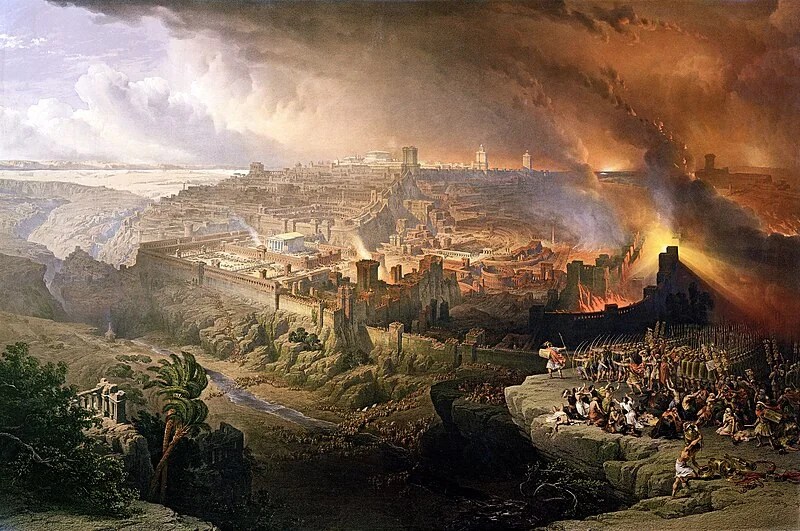





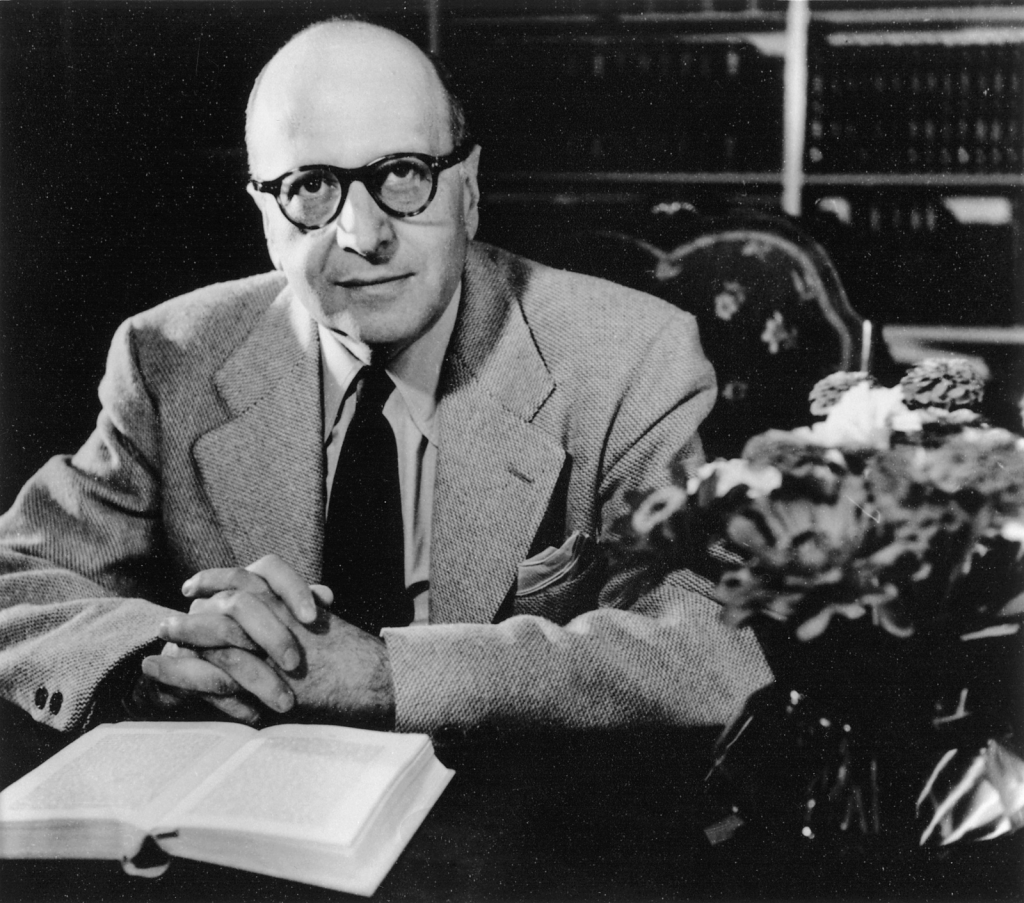







 Bridge Roe: Where Thinking Matters